
.png)
LinkedIn has become one of the most competitive attention environments in B2B.
Every day, decision-makers scroll past hundreds of posts from founders, operators, consultants, and brands all competing for the same two seconds of focus. In that context, the hook is no longer a creative flourish. It is the single most important lever in any LinkedIn content strategy.
This is why so many well-reasoned, experience-led posts fail to land. The insight might be strong. The perspective might be earned. But if the opening doesn’t immediately signal relevance, the rest of the post is never read.
This article breaks down the six most effective LinkedIn hooks for B2B leaders, why they work, and how to use them consistently without sounding templated or click-driven.
A strong LinkedIn hook is not about being shocking, vague, or overly clever.
In a B2B context, effective hooks do three things within the first two lines:
Most underperforming hooks fail because they prioritise novelty over relevance. High-performing hooks feel familiar, not surprising. They articulate something the reader already senses but hasn’t fully named.
This aligns closely with the broader structure behind high-performing LinkedIn content. If you want a deeper breakdown of how hooks fit into the full post framework, this article on the core elements of strong posts is a useful reference:
https://www.shakecontent.com/insights/anatomy-of-a-high-performing-linkedin-post-in-b2b
Below are the hook types we see consistently drive attention, read-through, and engagement for founders and senior leaders when used with intent.
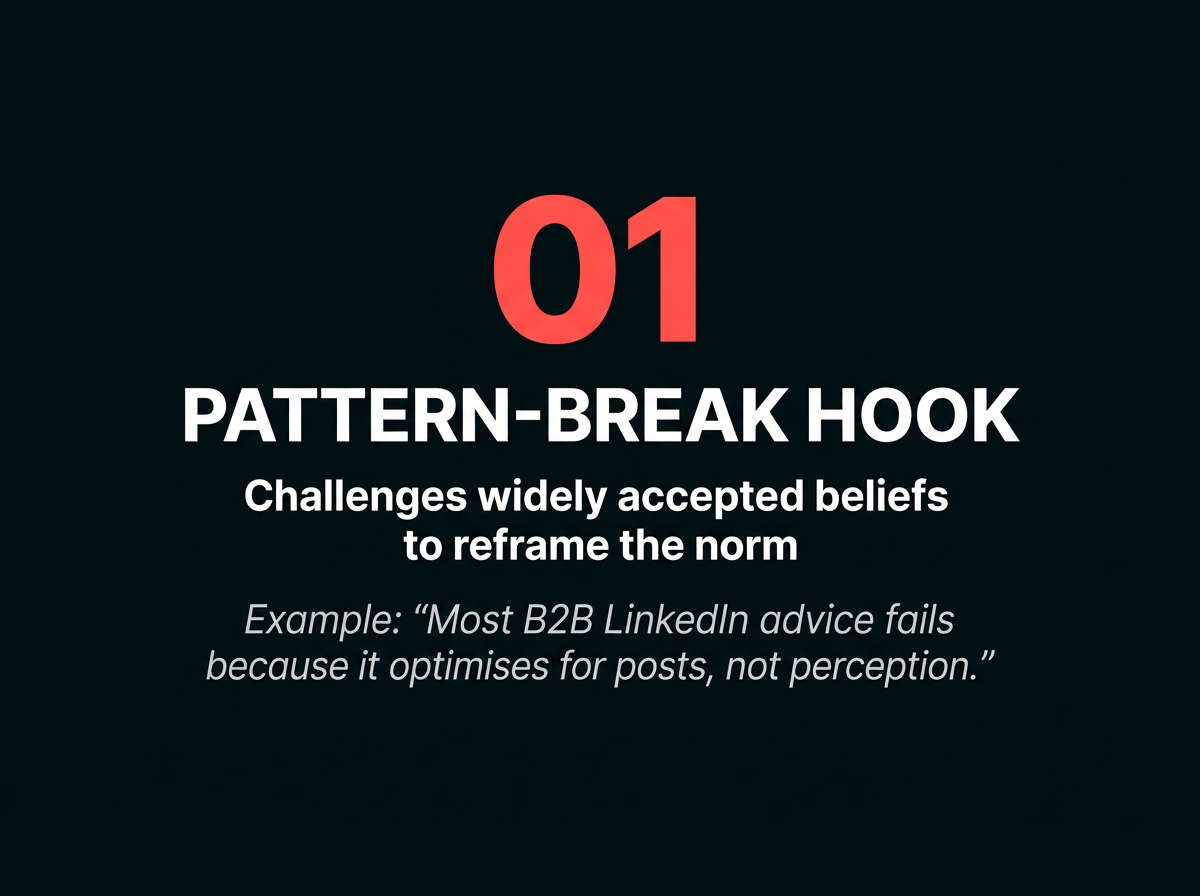
This hook works by challenging a widely accepted belief or default behaviour.
It doesn’t attack the reader. It reframes the norm.
Why it works:
B2B audiences are pattern-driven. When you interrupt a familiar narrative with a credible alternative, attention follows.
Examples:
How to use it well:
Only challenge beliefs you can genuinely defend. Pattern-break hooks require insight later in the post to land properly.

This hook mirrors a frustration the reader already feels but may not have articulated clearly.
Why it works:
Recognition creates trust. When readers see their own experience reflected immediately, they keep reading.
Examples:
How to use it well:
Be specific. Generic pain points feel hollow. Precise frustrations feel earned.
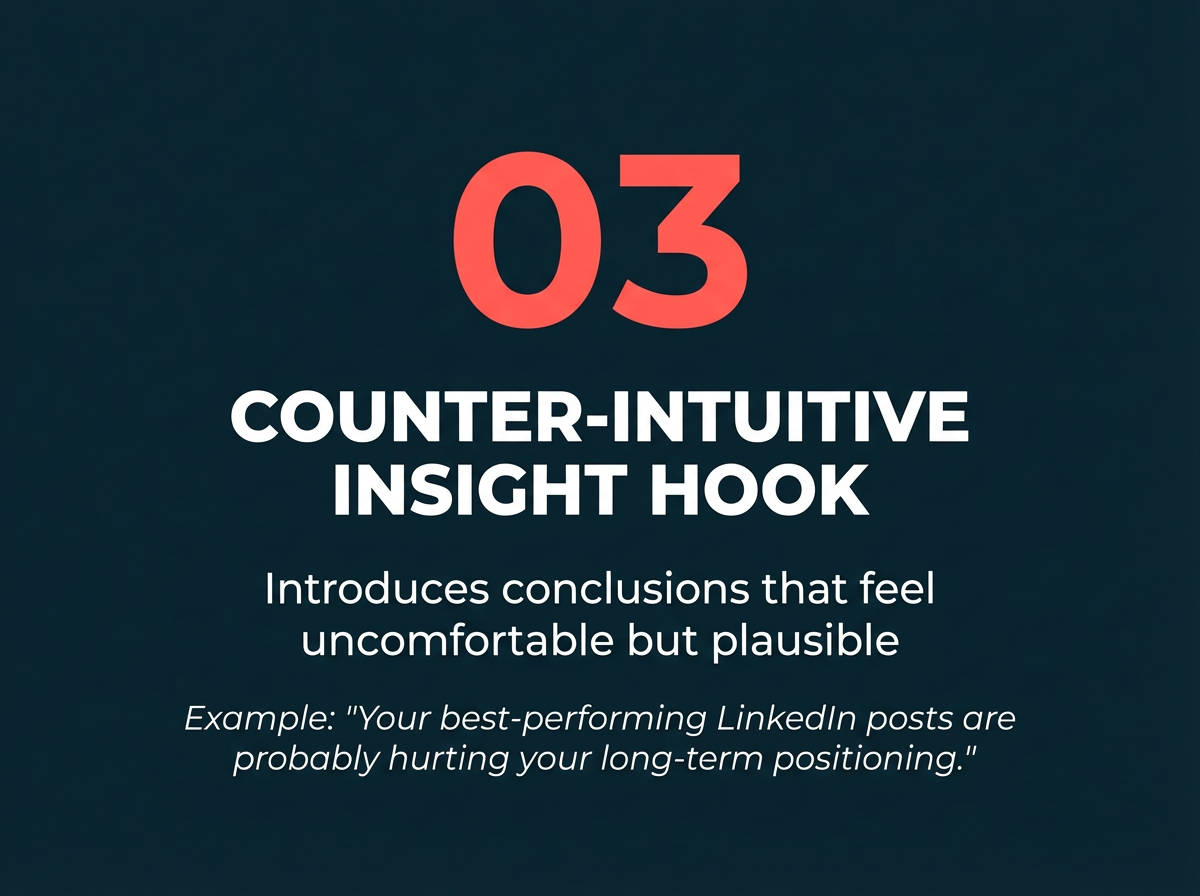
This hook introduces a conclusion that feels slightly uncomfortable but plausible.
Why it works:
It creates cognitive tension. The reader wants to understand why the statement could be true.
Examples:
How to use it well:
Make sure the post resolves the tension. Counter-intuitive hooks without explanation damage credibility.
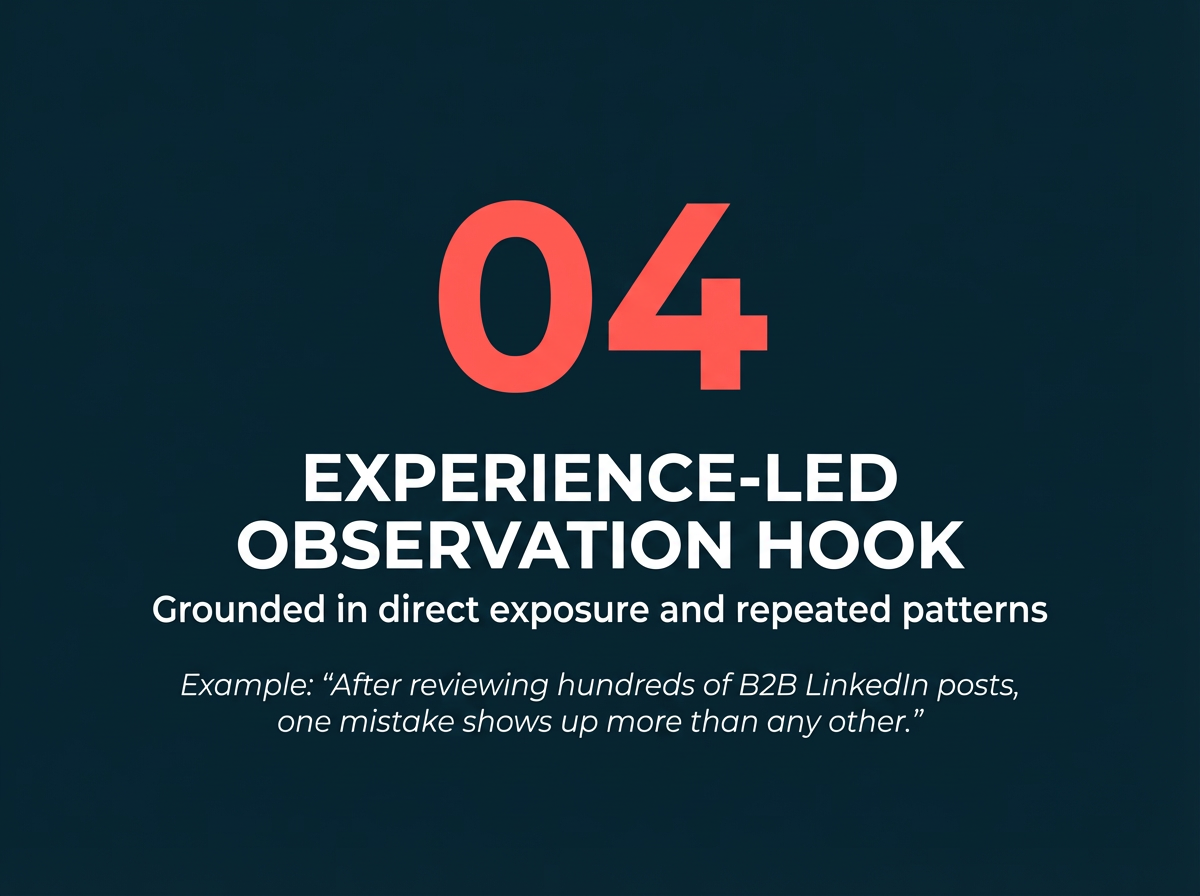
This hook is grounded in direct exposure: work with clients, repeated patterns, or long-term execution.
Why it works:
Experience signals authority without needing to say “we’ve worked with X companies.”
Examples:
How to use it well:
Anchor the observation in patterns, not anecdotes alone. The value comes from repetition, not exception.
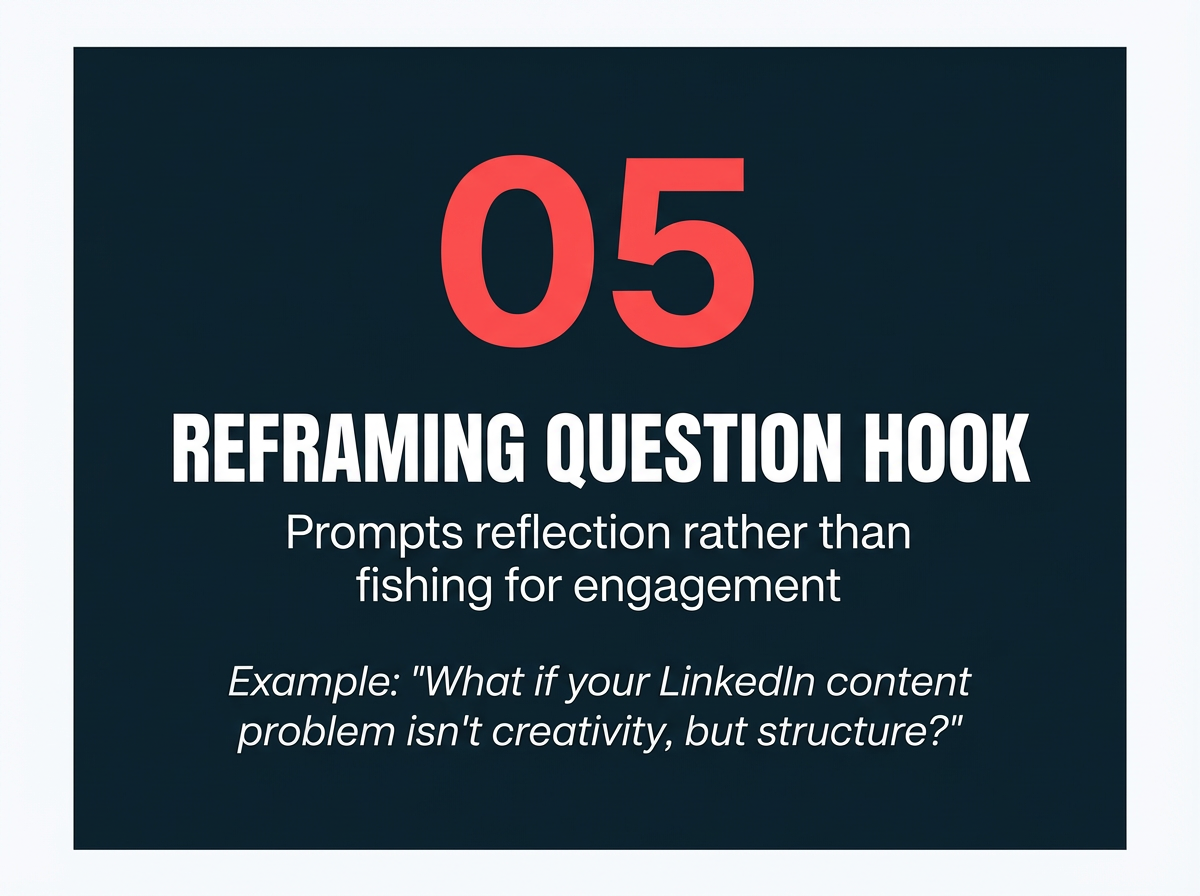
This is one of the few question-based hooks that works consistently in B2B.
Why it works:
It prompts reflection rather than fishing for engagement.
Examples:
How to use it well:
Avoid broad or rhetorical questions. The question should frame the argument that follows, not replace it.
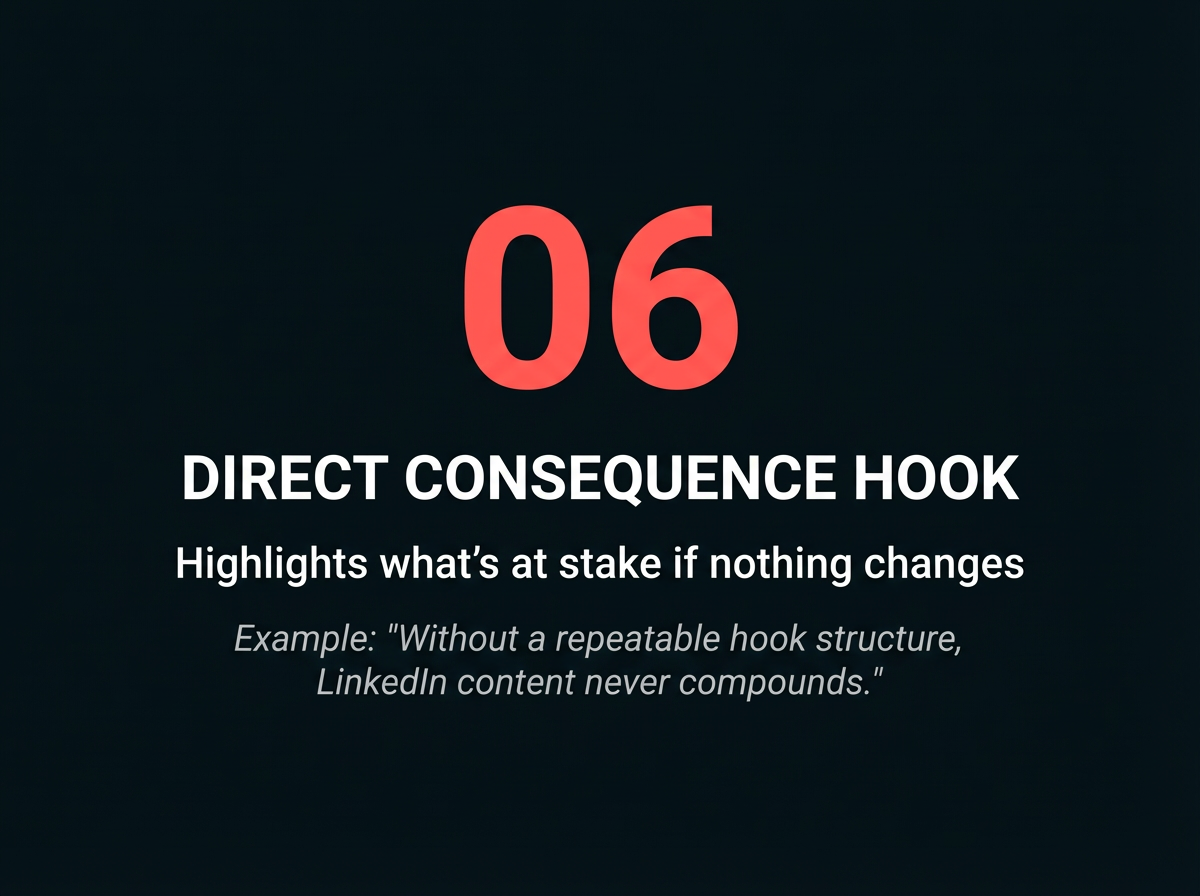
This hook highlights what’s at stake if nothing changes.
Why it works:
Senior audiences are outcome-driven. Clear consequences cut through noise.
Examples:
How to use it well:
Keep it grounded. Overstated consequences feel sales-led and reduce trust.
Hooks don’t work in isolation.
They are the entry point into a larger content system that includes narrative flow, insight development, and proof. When hooks are treated as a repeatable input rather than a creative gamble, LinkedIn content becomes more predictable and less draining.
This is where many B2B leaders benefit from moving away from one-off posting toward structured workflows. A strong hook library reduces cognitive load and makes consistency sustainable.
To make this practical, we’ve put together a simple LinkedIn Hook Template that founders and leaders can use to pressure-test openings before publishing. It’s designed to help you choose the right hook type based on intent, not guesswork, and apply it consistently across posts.
Even experienced B2B leaders fall into the same traps:
The strongest hooks don’t try to impress. They try to be understood quickly by the right people.
Before publishing, ask:
If the answer is no to any of these, the hook needs refining.
As LinkedIn becomes more saturated, attention is earned faster and lost more easily. Hooks are no longer optional. They are the foundation of effective B2B storytelling on the platform.
When hooks are treated as a system, not a talent test, LinkedIn content shifts from inconsistent output to compounding visibility.
That’s the difference between posting and positioning.
Download our LinkedIn Hook Template and use it to map the six hook types in your own content.


