
.png)
LinkedIn has evolved into one of the most influential distribution channels in B2B. It is where credibility is built long before a sales call, where positioning is tested in public, and where founders and executives increasingly compete for attention within highly specific professional markets.
Yet despite the platform’s strategic importance, most content performance discussions remain surface-level. Advice often revolves around posting frequency, trending formats, or anecdotal hacks. In reality, LinkedIn distribution operates on a clear set of behavioural and structural signals. Once those signals are understood, performance becomes more predictable and far less mysterious.
This guide expands on the downloadable LinkedIn Algorithm resource and walks through the structural drivers of reach, engagement, authority, and compounding visibility.
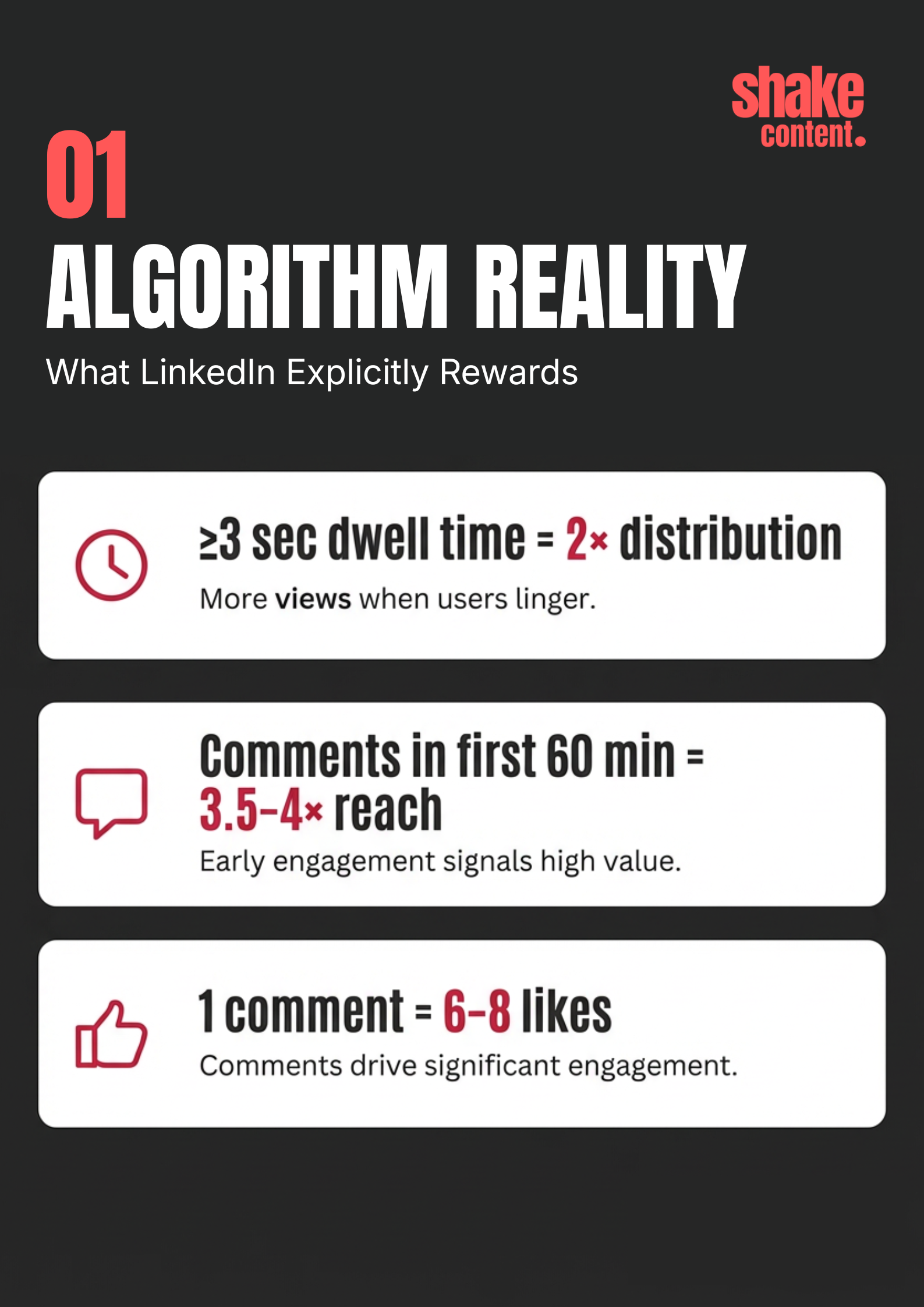
The LinkedIn algorithm prioritises interaction quality over vanity engagement. While impressions are often discussed, the deeper signals shaping distribution are dwell time, early engagement, and conversation depth.
Dwell time measures how long users remain on a post before scrolling away. When readers pause, re-read, or expand content, the algorithm interprets this as relevance. Early comments, particularly within the first hour, act as a strong validation signal that the content has sparked meaningful reaction. Beyond raw comment count, the quality of conversation also matters. Posts that generate layered discussion tend to sustain distribution far longer than posts that attract isolated reactions.
For founders building LinkedIn thought leadership, this means the opening lines carry disproportionate weight. A weak introduction shortens dwell time and limits distribution before the body of the content has a chance to perform. Structurally strong hooks are not stylistic choices. They are distribution levers.
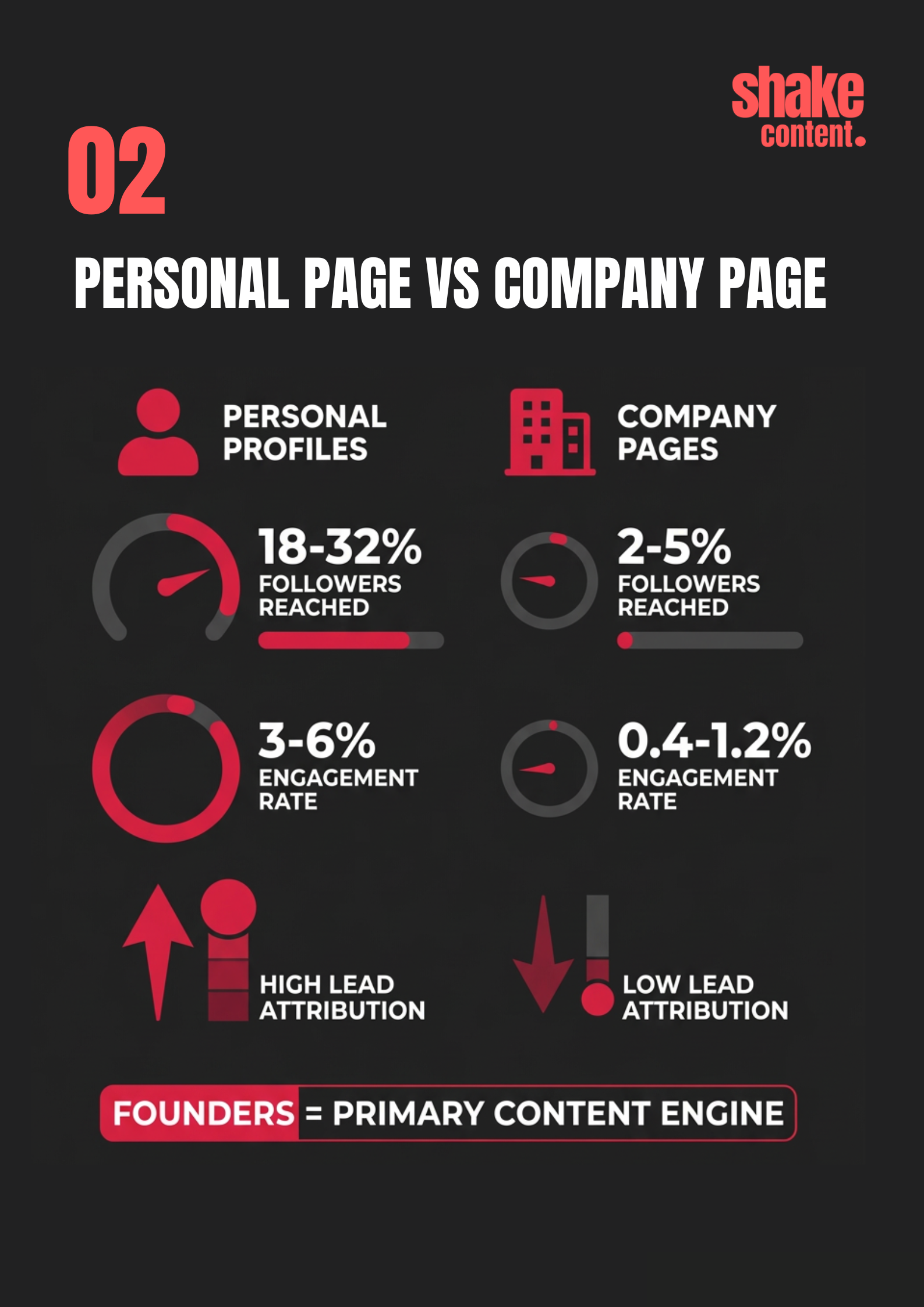
One of the clearest patterns in B2B LinkedIn performance is the difference between personal profiles and company pages. While both serve strategic roles, their algorithmic treatment is not equal.
Personal profiles benefit from relationship-based distribution. LinkedIn prioritises content from individuals within users’ networks because personal interaction is core to the platform’s design. As a result, personal profiles consistently achieve higher reach and stronger engagement rates compared to company pages of similar follower size.
Company pages, by contrast, are structurally limited in organic distribution. They are effective for validation and paid campaigns, but rarely serve as the primary engine for organic thought leadership.
For B2B growth, this distinction is critical. Founders and executives are not merely brand representatives. On LinkedIn, they are the brand’s primary distribution channel.
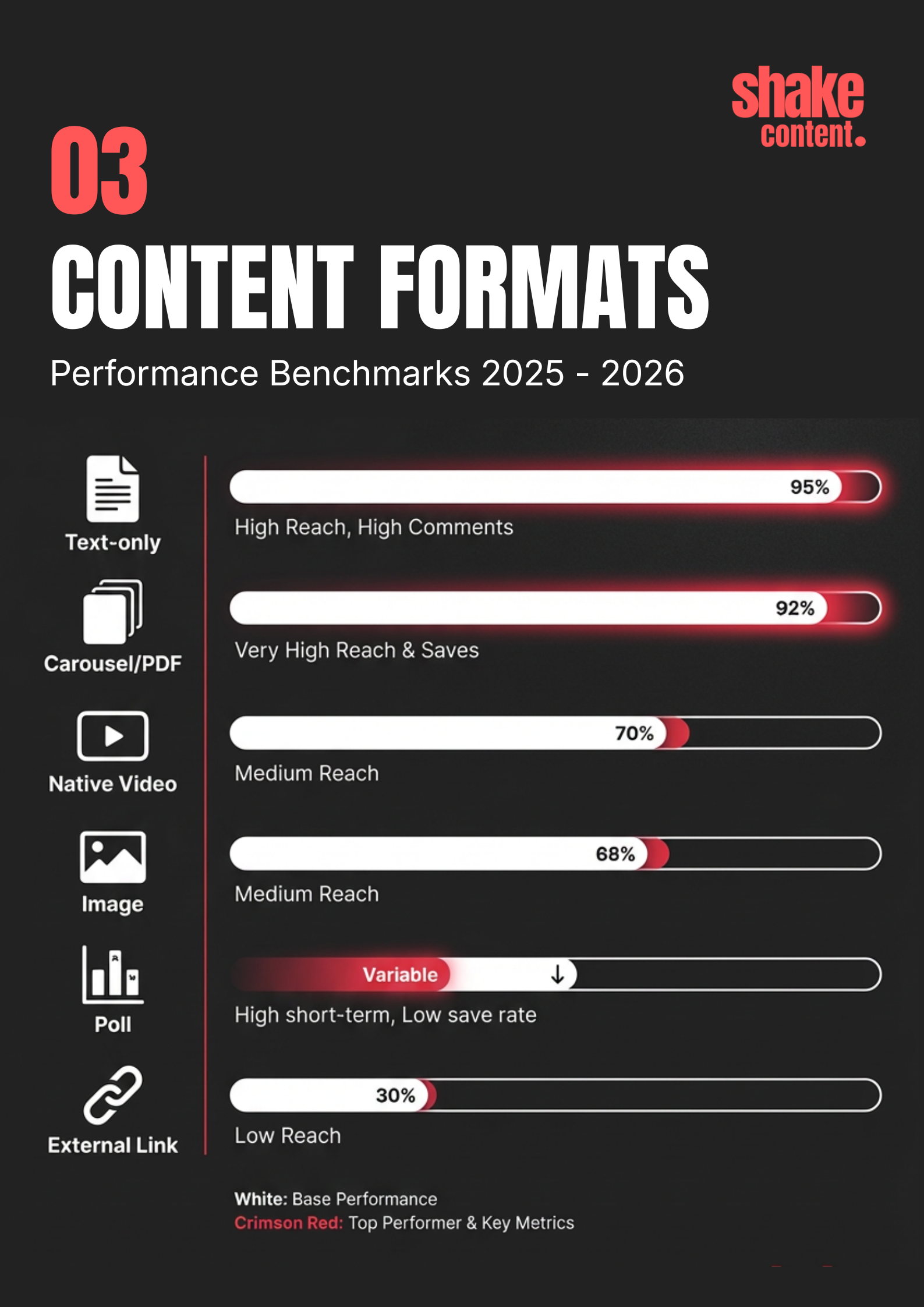
Content format influences distribution, but not in isolation from message quality. Text-only posts continue to perform strongly because they maximise dwell time and minimise friction. Carousel and PDF posts perform particularly well when they provide structured educational value, encouraging saves and repeated viewing.
Native video holds strategic value when the message is clear and concise, but its performance depends heavily on retention in the first seconds. Static images tend to produce moderate reach, while posts containing external links generally underperform due to the platform’s preference for keeping users within the LinkedIn ecosystem.
The key takeaway is not that one format dominates universally, but that format must align with intent. Educational breakdowns benefit from carousels. Narrative-based authority often performs best in text. Format selection should be deliberate rather than aesthetic.
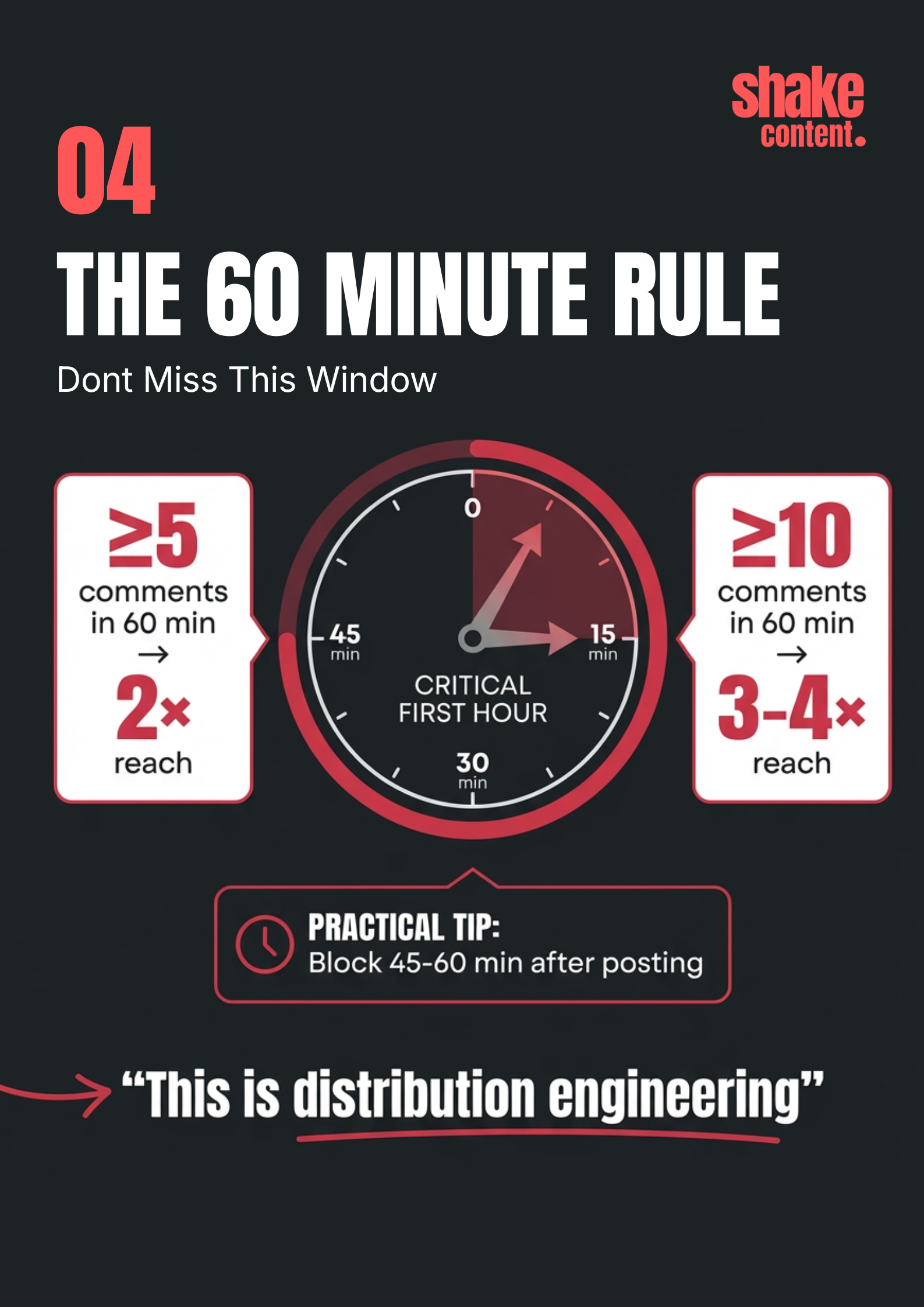
LinkedIn distributes content in phases. The first phase acts as a testing environment. A post is shown to a segment of the network. If engagement signals are strong, distribution expands. If signals are weak, reach contracts.
This makes the first sixty minutes after publishing particularly important. Active engagement from the author during this window can sustain momentum. Responding thoughtfully to comments, encouraging dialogue, and extending discussion increases both dwell time and perceived relevance.
Many posts fail not because the insight is weak, but because they are published without any follow-through. Distribution rewards participation, not passive broadcasting.
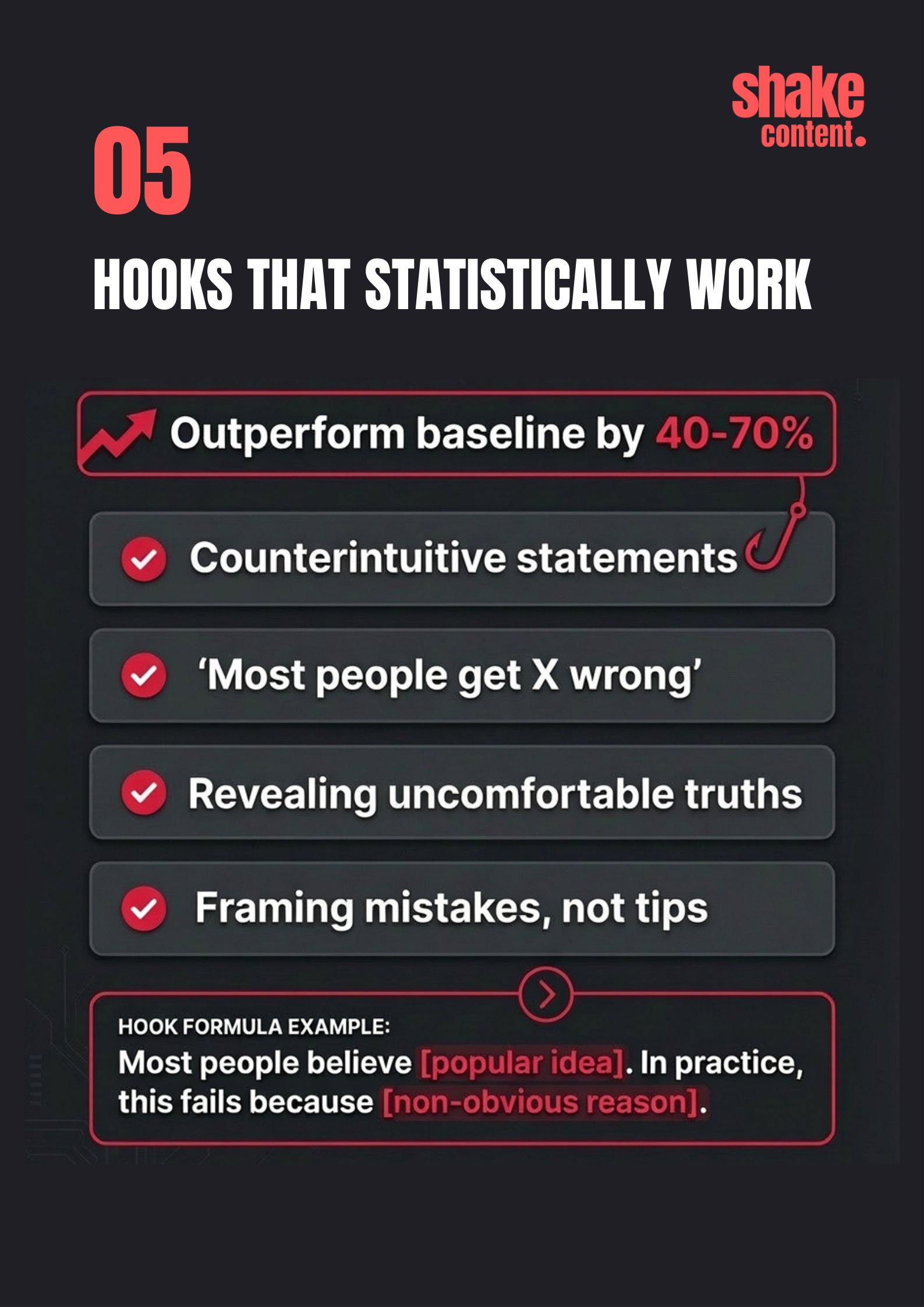
Hooks determine whether content is read at all. The most consistently high-performing openings share one common trait: they challenge expectation.
Statements that reveal uncomfortable truths, question widely held assumptions, or highlight common mistakes create cognitive tension. That tension encourages readers to continue. By contrast, descriptive or generic openings rarely generate the same pause in scrolling behaviour.
Importantly, strong hooks are not clickbait. They are structured reframes. They signal that the post will offer a perspective, not simply information. In B2B thought leadership, this distinction separates authority from noise.
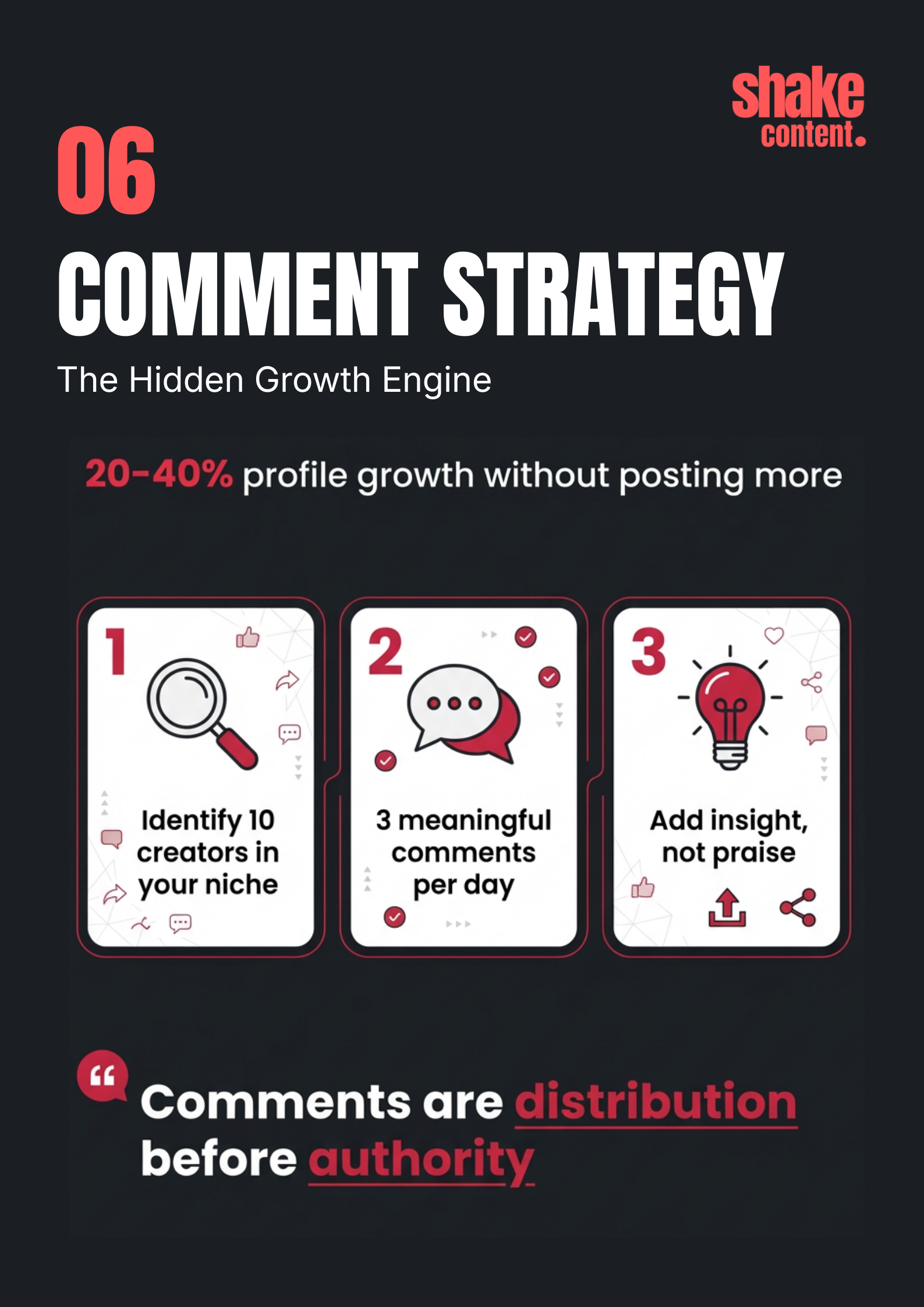
Commenting is frequently overlooked as a distribution strategy. However, consistent, thoughtful commenting on relevant creators’ posts increases profile visibility significantly. When comments add insight rather than surface-level praise, they position the author as a contributor to the broader conversation within their niche.
This activity also strengthens network relevance. The algorithm recognises recurring interactions and gradually associates profiles with specific topical clusters. Over time, this improves the likelihood that future posts reach a more aligned audience.
In structured LinkedIn content systems, commenting is not reactive. It’s scheduled and intentional.
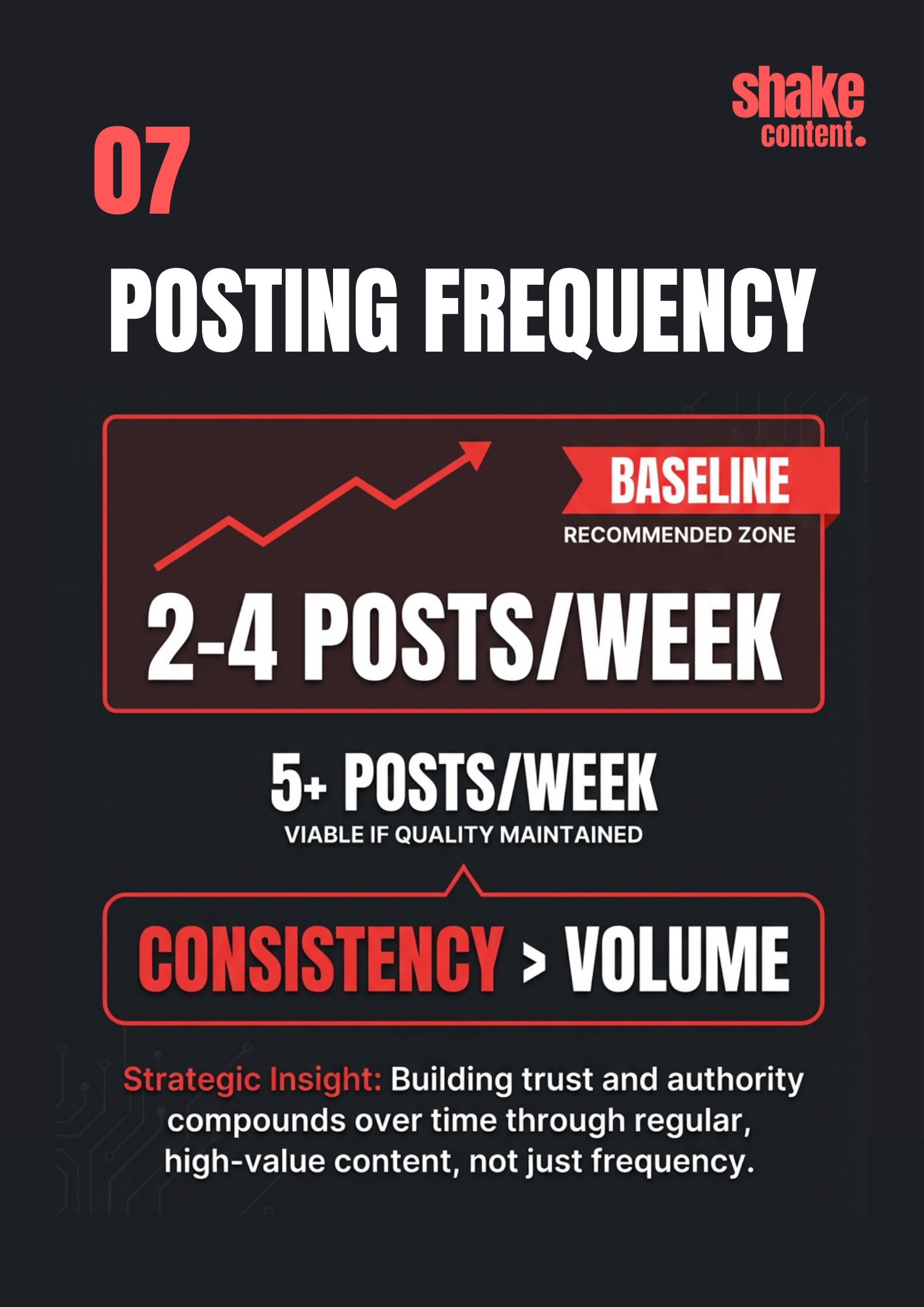
There is no universal ideal posting frequency, but patterns suggest that two to four high-quality posts per week provide sufficient signal consistency without sacrificing depth. Increasing volume without maintaining clarity and positioning often dilutes authority rather than enhancing it.
LinkedIn rewards recognisable positioning. When topics, tone, and perspective shift too frequently, the algorithm struggles to categorise the account’s authority. Consistency strengthens topical association, which in turn supports long-term distribution.
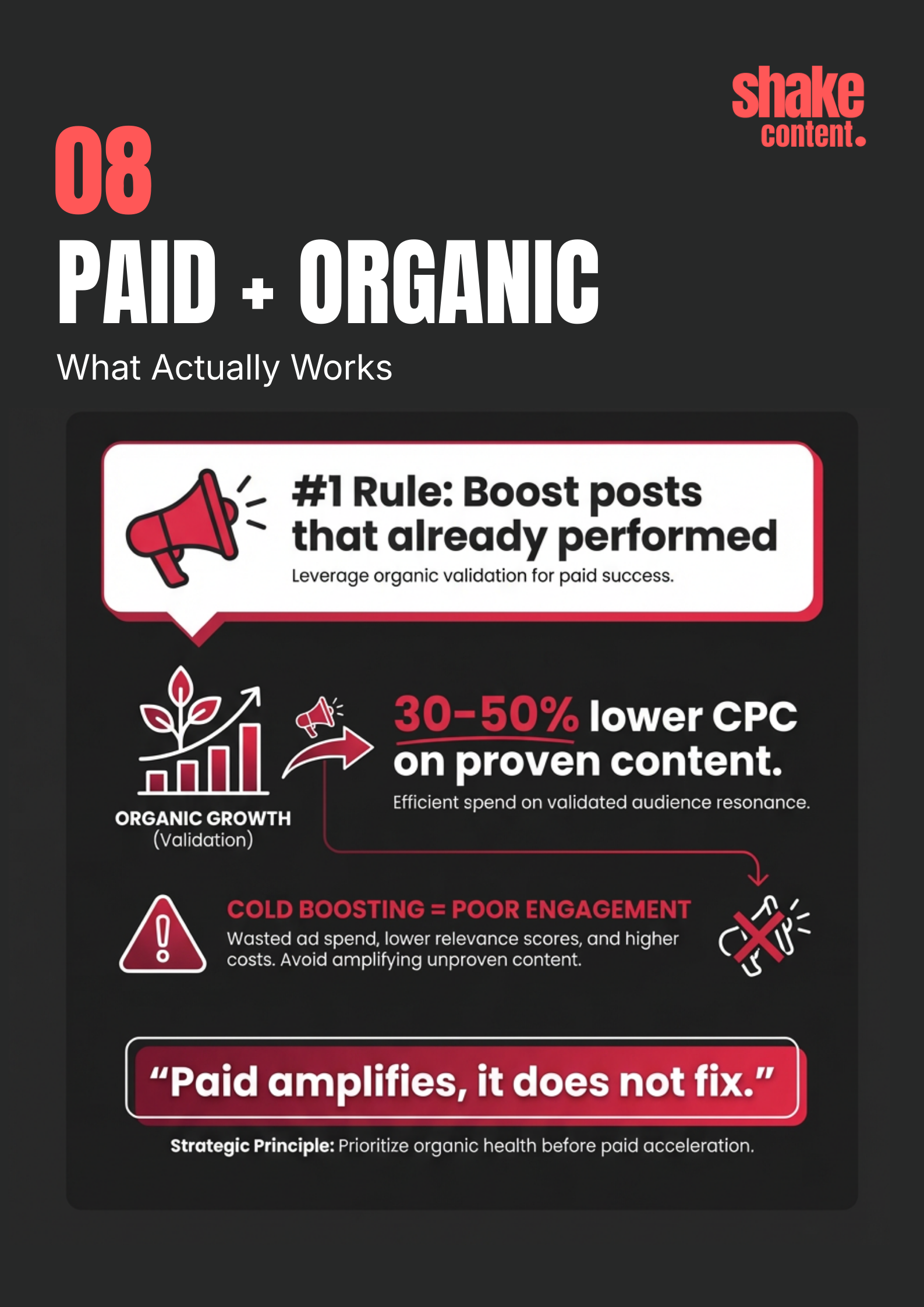
Paid amplification is most effective when layered on top of validated organic performance. Boosting posts that have already demonstrated strong engagement lowers acquisition costs and increases campaign efficiency.
Cold boosting underperforming posts rarely improves outcomes. Paid distribution amplifies existing resonance. It does not manufacture it. Organic performance acts as a testing ground, providing insight into audience response before budget is allocated.
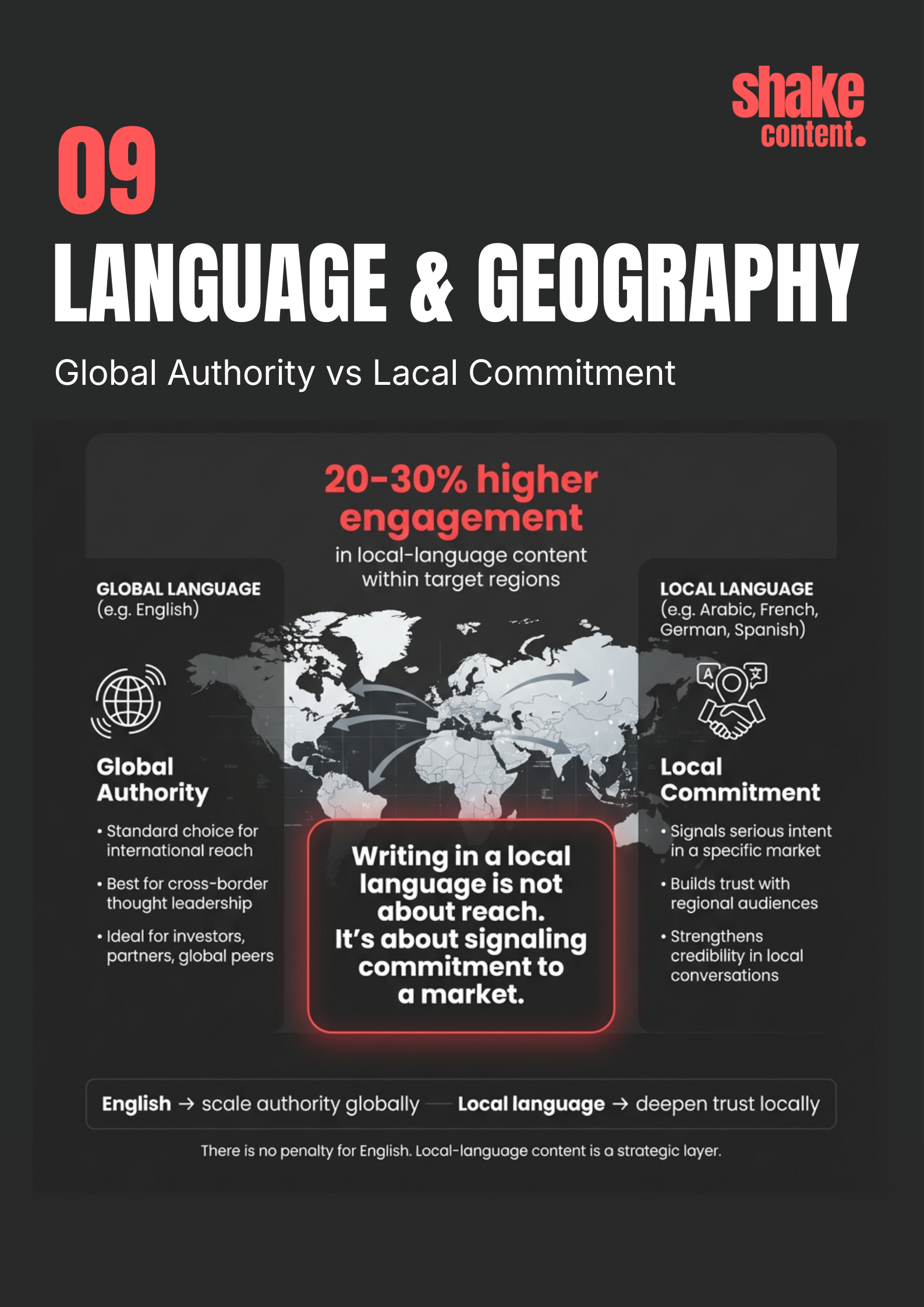
Language choice influences not only reach but positioning. Publishing in English supports global authority and cross-border thought leadership. Publishing in local languages signals commitment to specific markets and often increases engagement within those regions.
This is not a question of right or wrong language. It is a strategic layering decision. Global authority and local trust serve different objectives.
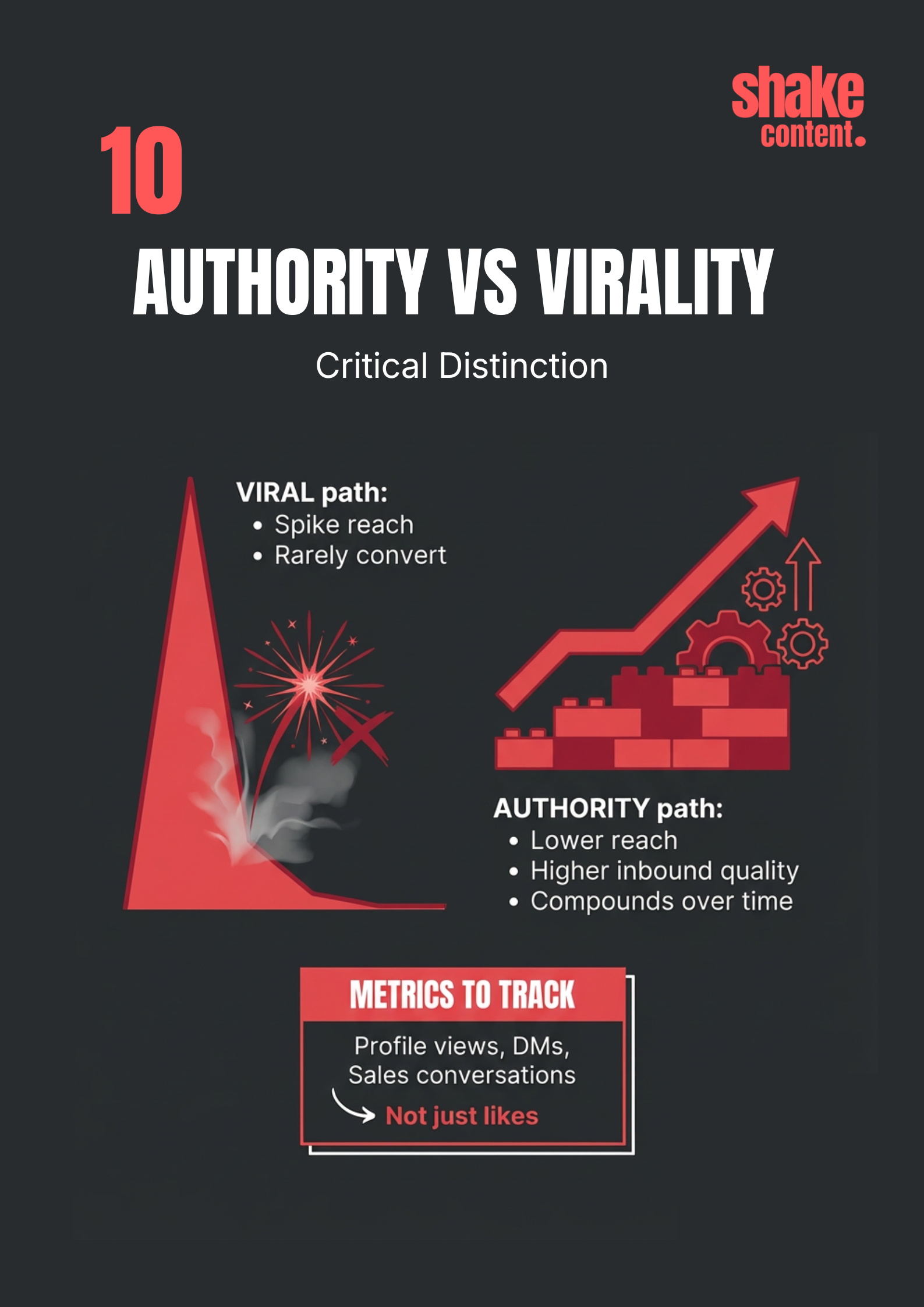
Virality often produces sharp but short-lived spikes in visibility. Authority compounds gradually. While viral posts may attract large impression counts, they rarely convert at the same rate as consistent, insight-driven content.
For B2B leaders, meaningful metrics extend beyond likes and shares. Profile views, inbound messages, and qualified sales conversations offer a clearer reflection of influence. Sustainable LinkedIn strategy prioritises authority building over momentary exposure.
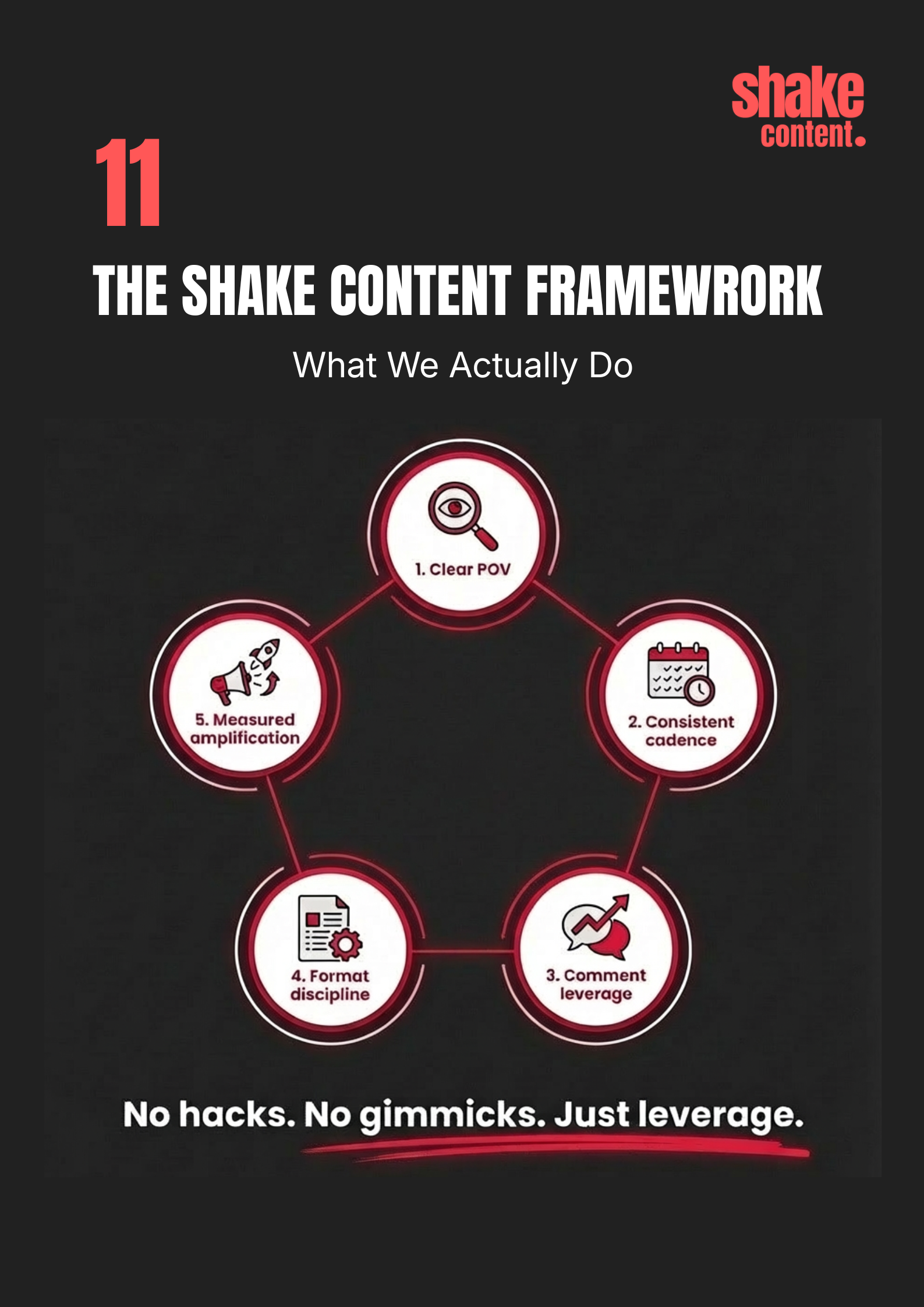
Sustainable LinkedIn growth requires more than creativity. It requires architecture. Clear positioning, consistent cadence, structured engagement, disciplined format selection, and measured amplification form the foundation of a repeatable content system. When these elements operate together, LinkedIn performance becomes far more predictable. Visibility compounds, authority strengthens, and inbound conversations increase over time.
At Shake Content, we help B2B founders, teams, and leaders build LinkedIn thought leadership through strategic content systems and personalised frameworks that turn founder insight into structured authority. Rather than chasing algorithm hacks, we focus on positioning clarity, repeatable content workflows, disciplined distribution, and measured amplification. The result is not just engagement, but inbound conversations that convert.
The LinkedIn algorithm is not opaque or unpredictable. It rewards attention retention, meaningful interaction, topical consistency, and conversation depth. Founders who treat LinkedIn as a structured distribution channel rather than a creative outlet consistently outperform those who rely on inspiration alone.
When content is designed around system thinking instead of sporadic effort, reach becomes more predictable, engagement becomes more purposeful, and authority compounds over time. The difference between inconsistent visibility and sustained influence is rarely talent. It is architecture.
If you’re ready to move beyond experimentation and build a LinkedIn content strategy that generates real pipeline, you can book a free strategy call with James Farnfield, CEO and Founder of Shake Content.
______________________________
If you want our LinkedIn Algorithm Guide as a practical reference you can apply to every post, drop your email below and we’ll send it straight to your inbox. 📩


