
LinkedIn has become one of the most important channels for B2B visibility, authority, and trust. It is where buyers form opinions before sales conversations happen, where founders build credibility in public, and where companies increasingly compete through expertise rather than advertising alone.
Despite that, most founders and leadership teams still struggle to answer a surprisingly simple question: Is our LinkedIn presence actually performing well?
A few posts may generate engagement. Profile views may occasionally spike. Some content may even perform strongly for a week or two. But isolated metrics rarely explain whether your positioning, content strategy, and audience relevance are compounding into long-term authority.
That is usually where the real problem sits.
Most B2B LinkedIn content is judged post by post instead of system by system.
One pattern we repeatedly see at Shake Content is that underperforming LinkedIn presence is rarely caused by effort alone. More often, the issue is inconsistent positioning, unclear messaging, weak audience alignment, or the absence of a repeatable content system.
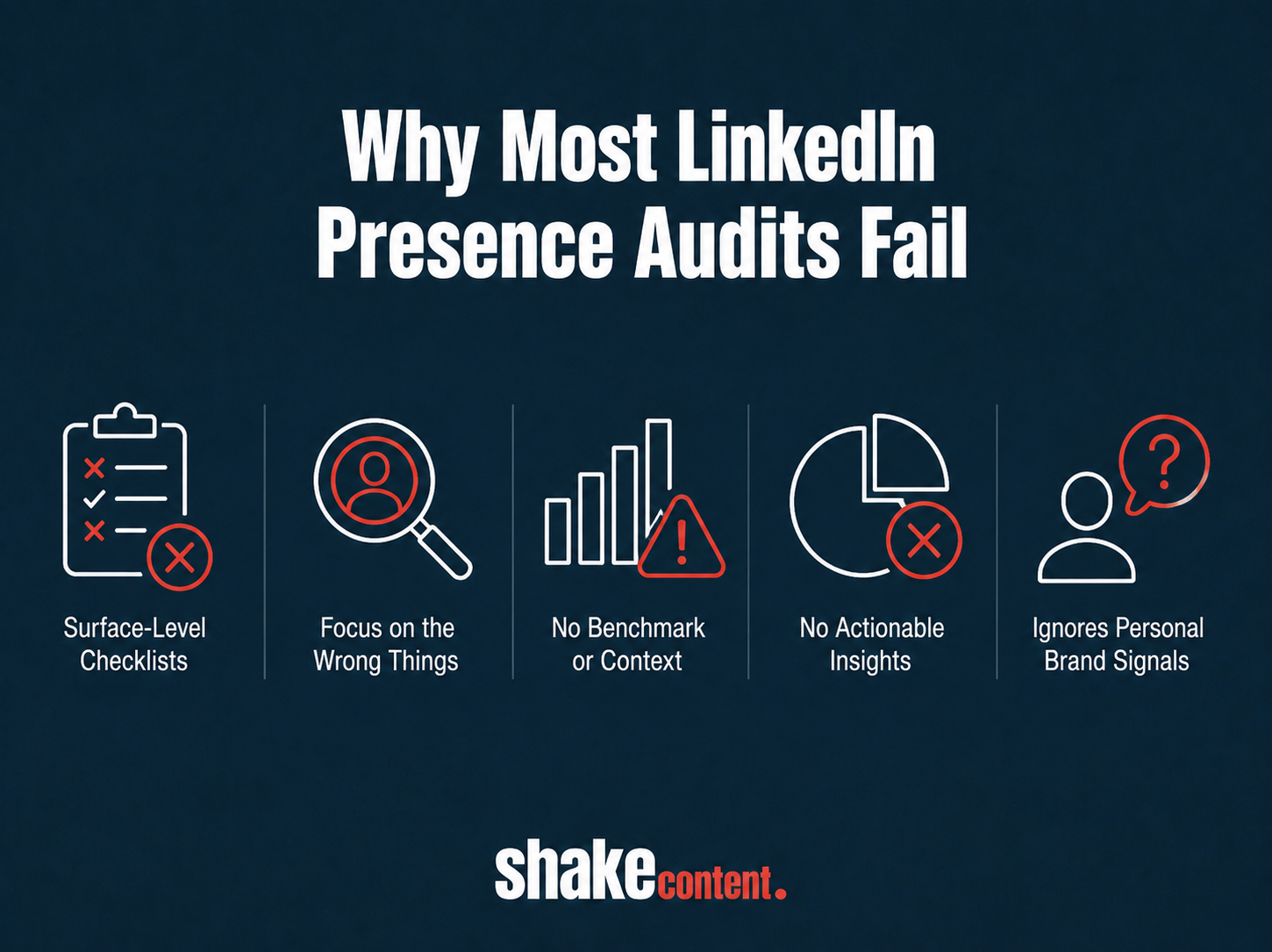
Most LinkedIn audits focus too heavily on surface-level performance.
They measure impressions, likes, follower growth, or whether a particular post “did well”. While those metrics can provide useful context, they rarely explain why some founders consistently build authority while others struggle to create momentum.
The underlying issue is usually structural.
Some profiles lack clear positioning. Others publish inconsistently or shift topics too frequently. In many cases, the content itself does not reinforce a recognisable point of view, which makes it difficult for both readers and LinkedIn to understand what the account actually stands for.
This is also why consistency wins over virality in B2B LinkedIn content.
One high-performing post may generate temporary attention, but authority is built through repeated positioning, recognisable expertise, and audience trust over time.
That requires more than occasional posting. It requires building a B2B LinkedIn strategy that compounds consistently rather than reacting to trends week by week.
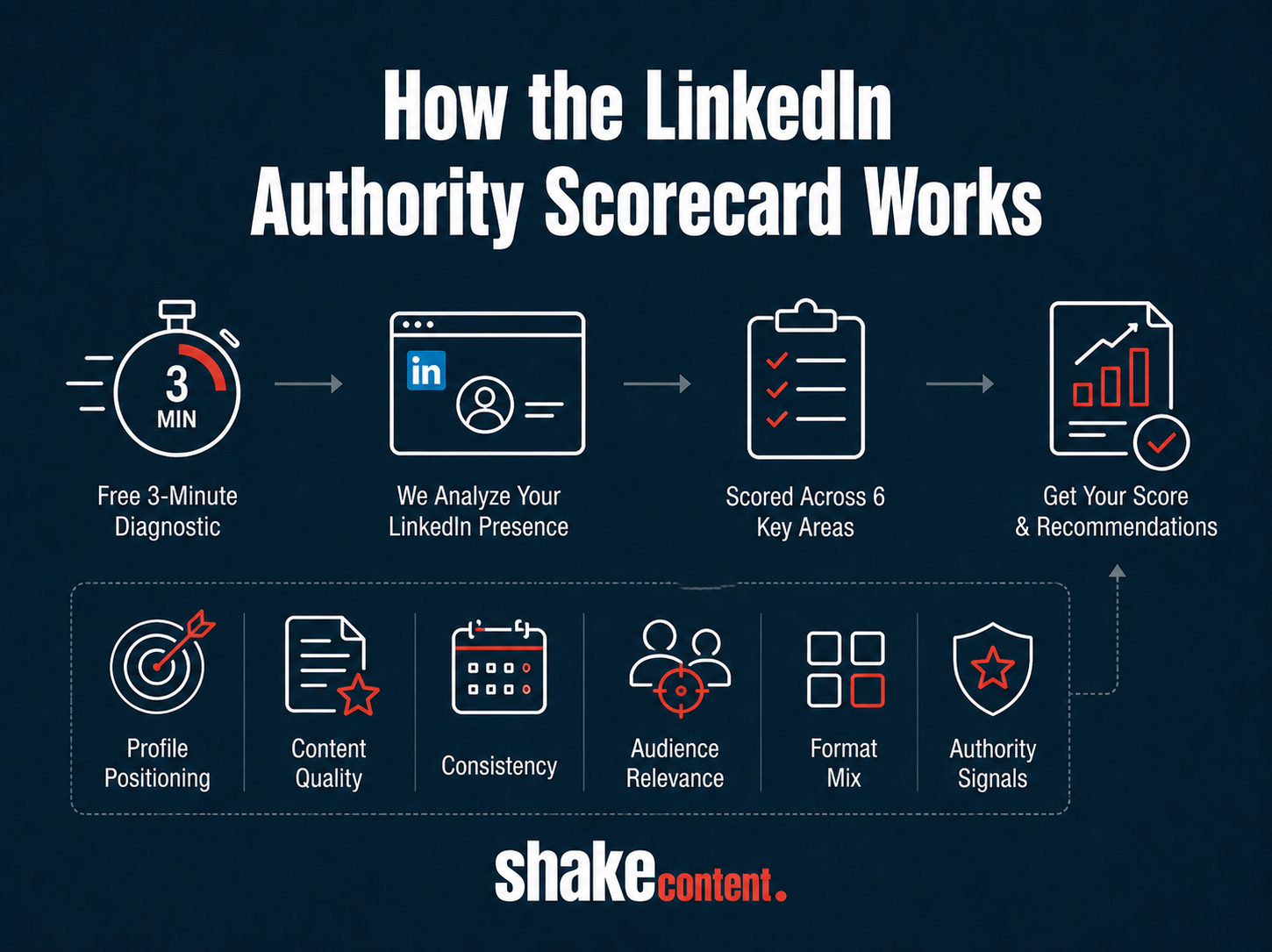
After seeing these patterns repeatedly across founders and leadership teams, Dani Markovits, our Chief Commercial Officer, developed the LinkedIn Authority Scorecard as a practical way to diagnose the areas that most directly influence LinkedIn authority and visibility.
The scorecard is a free 3-minute diagnostic designed to evaluate how effectively your LinkedIn presence performs across the areas that matter most in B2B.
It assesses:
along with practical recommendations for improvement.
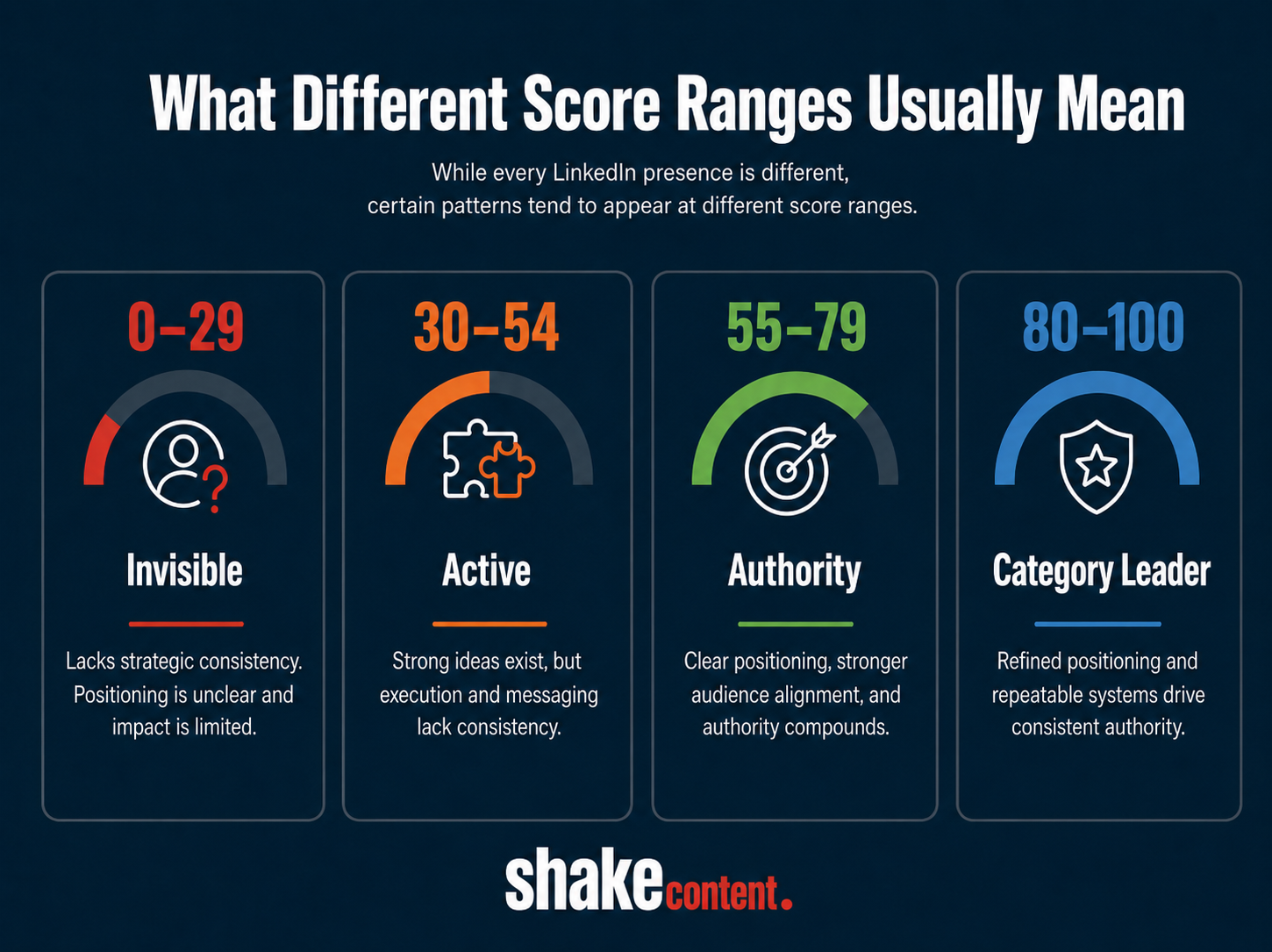
While every LinkedIn presence is different, certain patterns tend to appear at different score ranges.
Profiles in this range usually lack strategic consistency.
Positioning may be unclear, content themes may shift too frequently, and the audience may not immediately understand what the account represents.
Content often feels reactive rather than connected to a clear area of expertise, which makes authority difficult to build over time.
This range often indicates that strong ideas already exist, but the execution remains inconsistent.
There may be occasional high-performing posts, but the positioning and messaging are not yet fully reinforced across the profile and content ecosystem.
This is often the stage where founders begin considering support from a LinkedIn marketing agency to create more structure around messaging, consistency, and authority building.
At this stage, the LinkedIn presence is usually well-positioned and increasingly recognisable.
Content themes are clearer, audience alignment is stronger, and authority compounds more naturally over time.
Founders in this range are typically operating with stronger consistency and a more refined point of view, even if there is still room to sharpen positioning and scale visibility further.
Profiles scoring in this range tend to operate with highly refined positioning and repeatable thought leadership systems.
Their content feels cohesive, recognisable, and strategically connected rather than reactive.
Audiences begin associating them with a clear category, expertise area, or perspective, which allows authority and visibility to compound consistently over time.
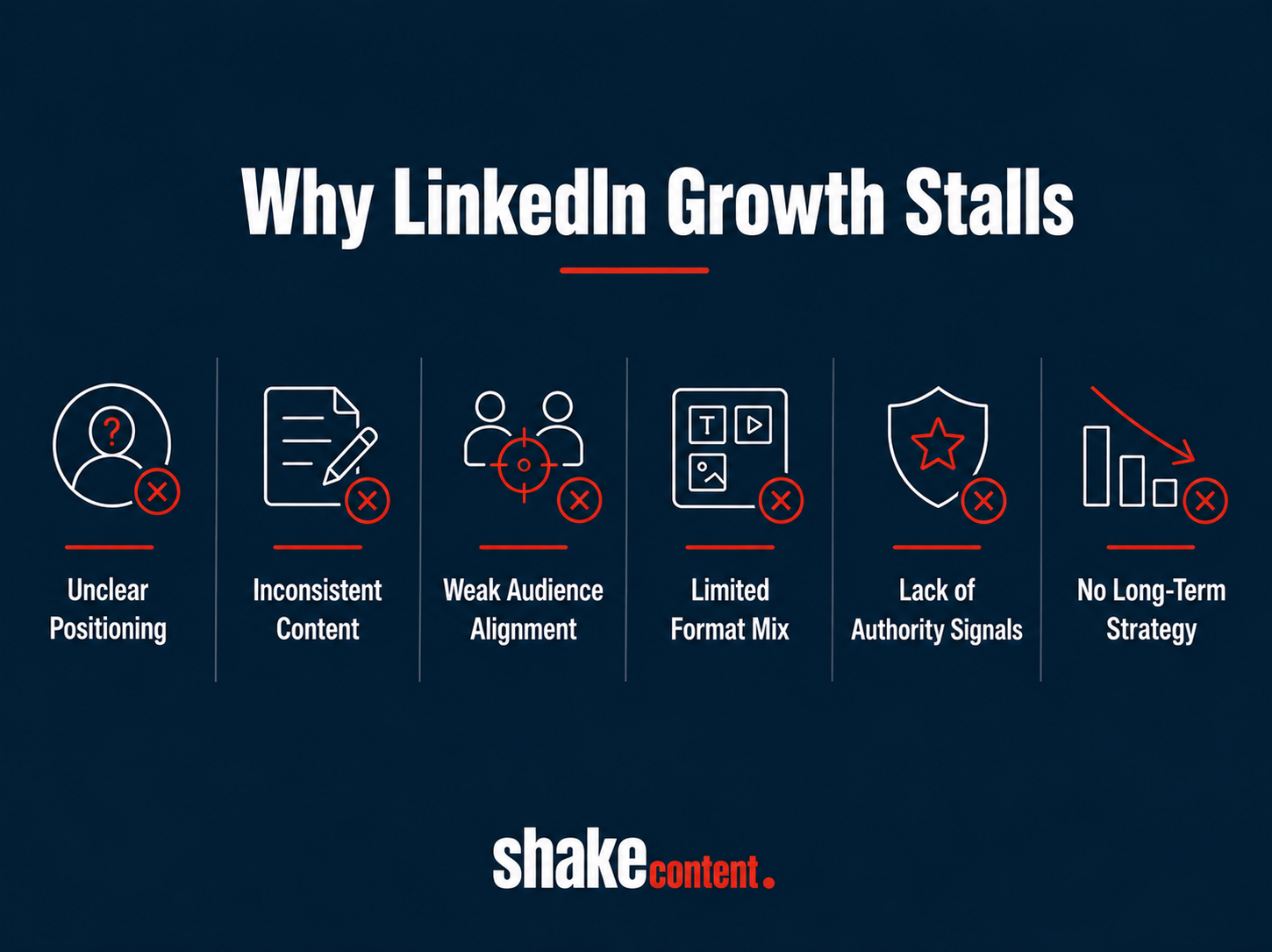
One of the biggest misconceptions in B2B LinkedIn content is the belief that growth comes from isolated viral moments.
In reality, most sustainable LinkedIn growth comes from consistency, repetition, and strategic clarity.
Founders often struggle because they are creating content reactively rather than operating from a repeatable framework. Posting becomes inconsistent, messaging changes too frequently, and authority becomes difficult to compound.
That is usually the point where working with a LinkedIn marketing agency becomes valuable.
A strong agency does not simply write posts. It helps build:
This is exactly what we focus on at Shake Content. We help founders and teams transform scattered expertise into structured B2B thought leadership systems designed for long-term authority building.
If you want a clearer picture of how your LinkedIn presence actually performs, use our free LinkedIn Authority Scorecard.
The diagnostic takes only around three minutes and provides a breakdown across positioning, consistency, audience relevance, content quality, and authority signals, along with practical recommendations for improvement.
[Take our Free LinkedIn Authority Scorecard]
A LinkedIn Authority Score is a diagnostic measurement of how effectively your LinkedIn presence builds credibility, positioning, and visibility within your industry.
Viral posts create temporary spikes in attention, but authority is usually built through repeated positioning and audience trust over time. In B2B, consistency tends to compound more effectively than isolated reach.
B2B founders improve LinkedIn authority by creating consistent content around clear expertise areas, sharing practical insights, and developing repeatable thought leadership systems.
A LinkedIn marketing agency helps founders and companies build strategic positioning, thought leadership systems, audience-focused content, and repeatable publishing workflows designed to strengthen authority and visibility on LinkedIn.


