
There is plenty of B2B content on LinkedIn. Far less of it feels like it could only have come from the person publishing it.
That distinction is important for founder-led marketing. Strong content is rarely built around generic business advice or whatever happens to be trending that week. It draws on the founder's experience, opinions, customer conversations and understanding of their market.
For B2B brands, that creates an opportunity to make expertise visible before a buyer ever enters a sales conversation. But what does strong founder-led content actually look like in practice?
Shake Content is a founder-led LinkedIn marketing agency that helps B2B founders, leaders and teams turn their expertise into strategic content systems and consistent B2B thought leadership. Here, we look at the types of founder-led LinkedIn content worth learning from, and what separates useful examples from content that simply fills the feed.
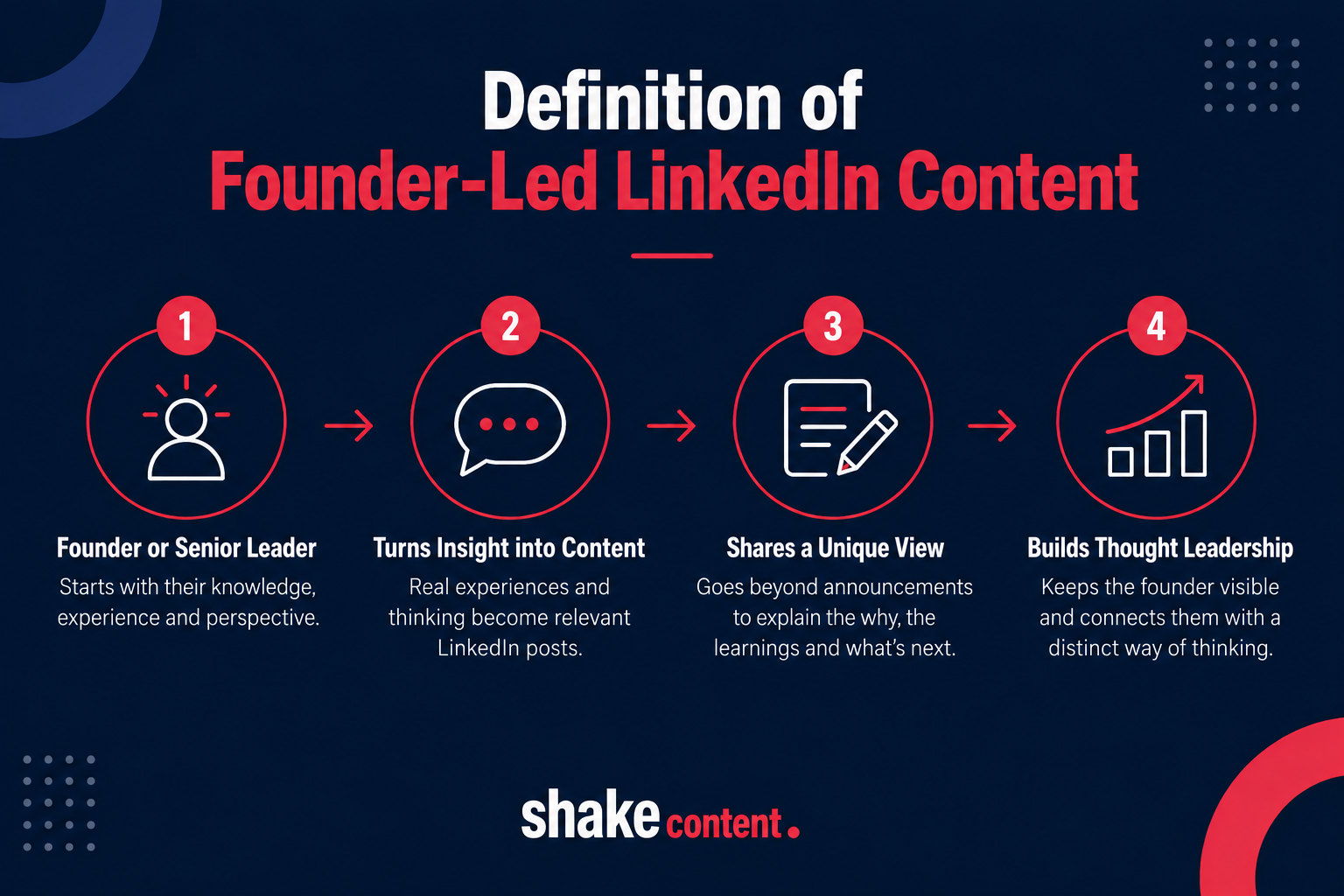
Founder-led LinkedIn content takes the knowledge, experiences and perspective of a founder or senior leader and turns them into content relevant to the people the business wants to reach.
The important part is where the thinking originates. A company page might announce a new product, for example, while the founder could explain the customer problem that led to it, the assumptions the team changed along the way or what building it revealed about the market.
This is also where LinkedIn content and thought leadership start to become different things. Publishing keeps a founder visible. Thought leadership gives people a reason to associate that founder with a particular way of thinking.
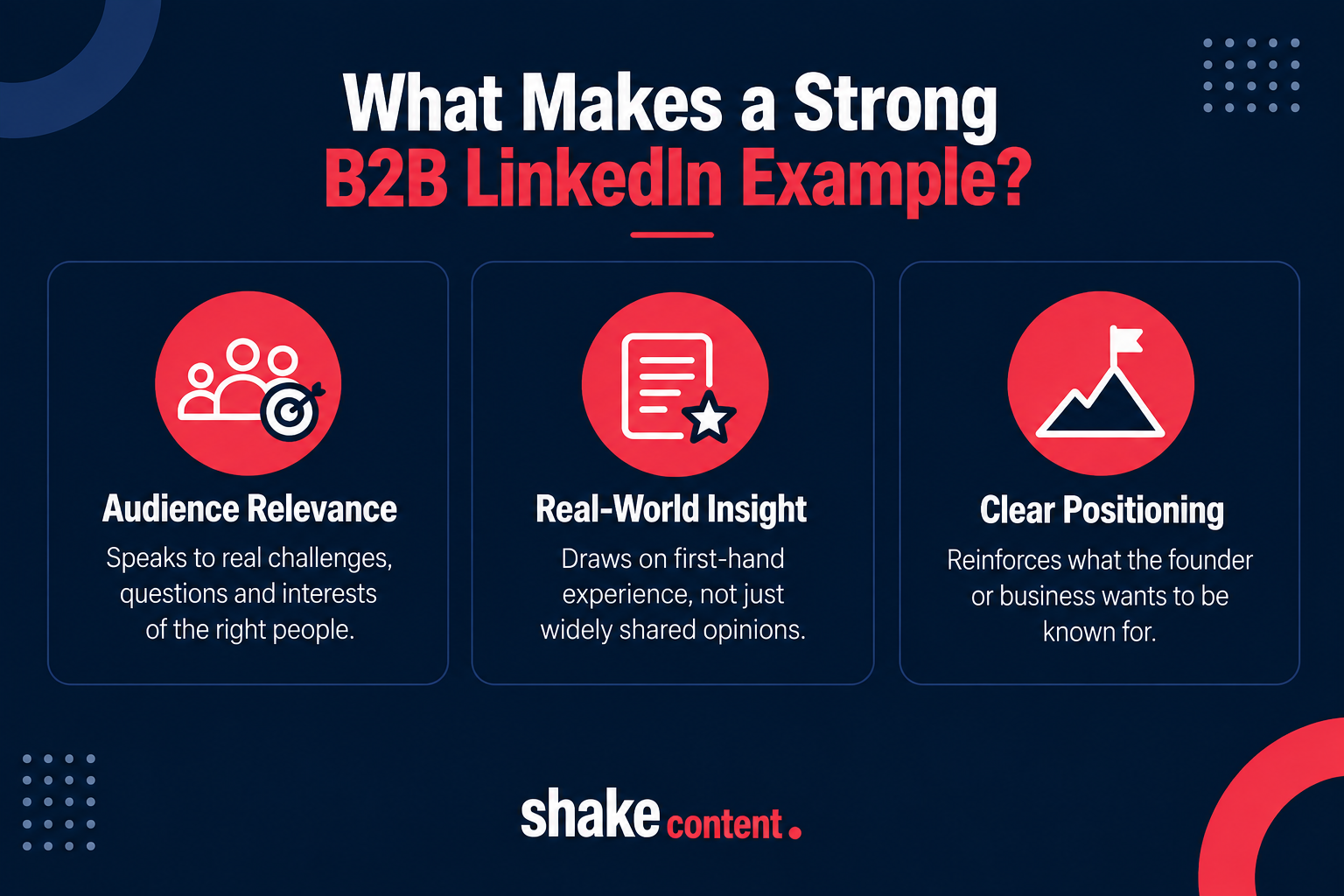
The best founder-led content tends to combine three things: relevance to the audience, genuine first-hand insight and a clear connection to what the founder or business wants to be known for.
That does not mean every post needs to be a major industry prediction. Often, the strongest material already exists inside normal business activity.
One of the clearest examples is a founder expressing a point of view on something happening in their market.
Rather than saying that AI is changing an industry, for example, a founder might explain which part of the workflow they believe AI will actually change, which parts are being overhyped and what they are already seeing among customers.
The difference is specificity. The reader gets an interpretation shaped by experience rather than another summary of an industry trend.
Over time, recurring perspectives also create positioning. If a founder consistently interprets the same handful of problems, audiences begin to understand what that person knows and what they stand for. This is why a strong B2B LinkedIn strategy needs defined areas of authority rather than an endless supply of unrelated topics.
Founder stories can be equally valuable, particularly when there is a useful business lesson behind them.
A SaaS founder might explain how a feature customers repeatedly requested ended up solving the wrong problem. A professional services founder might describe the warning signs they notice before a client project becomes difficult. Another could unpack a hiring, pricing or positioning decision that changed how the company operates.
These examples work because the story provides evidence for the insight. They are also a useful reminder that B2B storytelling does not have to mean dramatic personal storytelling. Customer observations, operational experiences and decisions inside the business can make complex topics easier to understand while keeping the content commercially relevant.
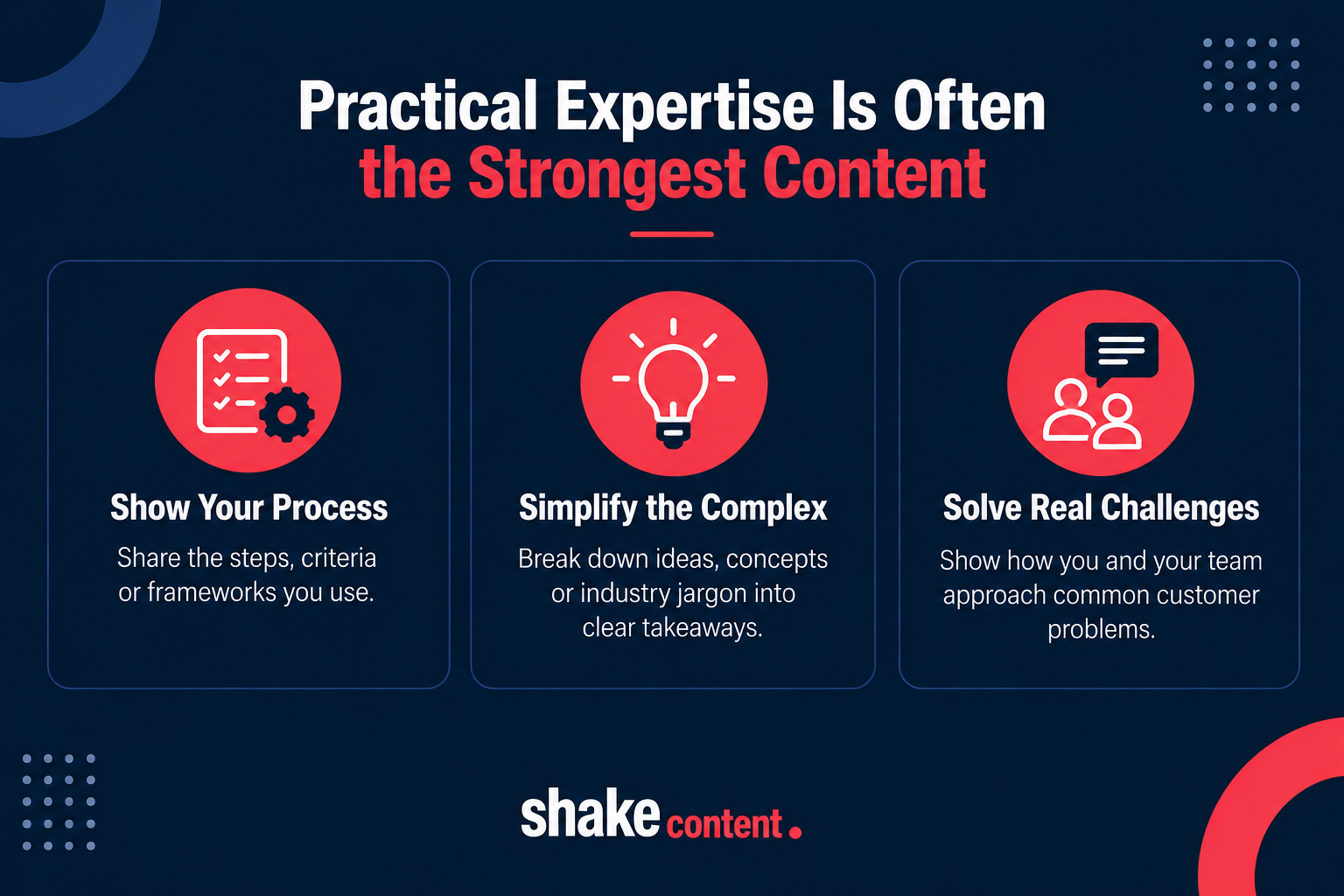
Founder-led content does not always need an opinion or story. Some of the strongest B2B LinkedIn marketing examples simply show people how an expert thinks about a problem.
A founder could explain the criteria they use before recommending a solution, break down a misunderstood industry concept or show how their team approaches a recurring customer challenge.
Consider the difference between "five ways to improve your B2B marketing" and a founder explaining "the three things we check before increasing a B2B founder's LinkedIn publishing frequency."
The second feels more credible because it comes from a recognisable process.
This type of educational content becomes particularly valuable for businesses selling complex products or services. The founder does not need to repeatedly tell the audience that the company is an expert. The content demonstrates that expertise instead.
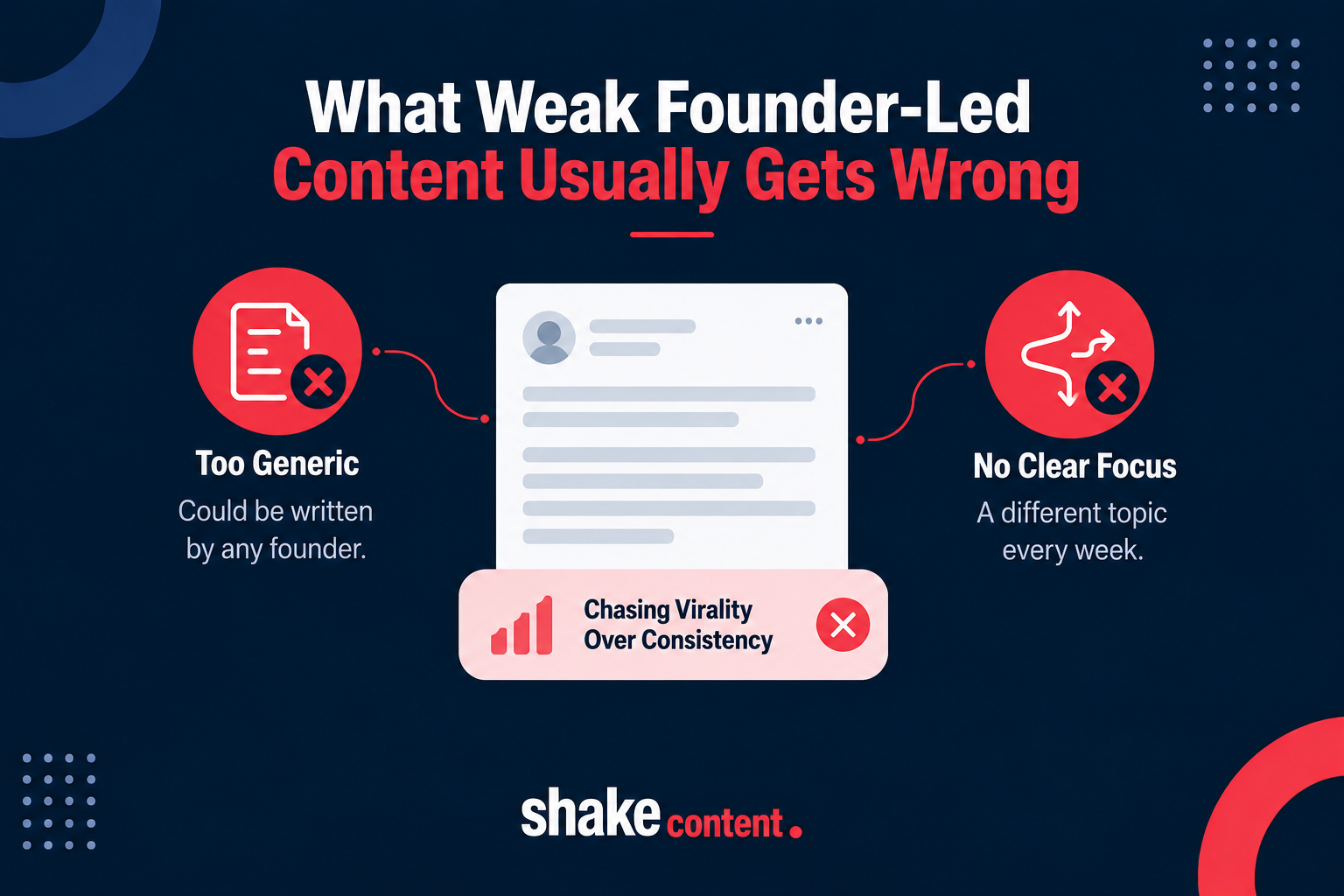
The easiest way to understand strong examples is to compare them with the patterns that make founder content forgettable.
Generic advice is one of the biggest problems. If the same post could be published by hundreds of founders with only the company name changed, it is unlikely to build much individual authority.
The other common problem is inconsistency of subject matter. One week the founder discusses leadership, the next AI, then productivity, hiring and a trending news story. Individual posts may perform well, but collectively they tell the audience very little about what the founder should be known for.
This is why consistency matters more than chasing LinkedIn virality. In B2B, authority tends to develop through repeated exposure to relevant ideas rather than one unusually successful post.
For most founders, the problem is not a shortage of expertise. It is that useful ideas appear during the working day rather than during a scheduled "content creation" session.
They appear in sales calls, customer questions, internal debates, hiring decisions, product conversations and reactions to developments in the market.
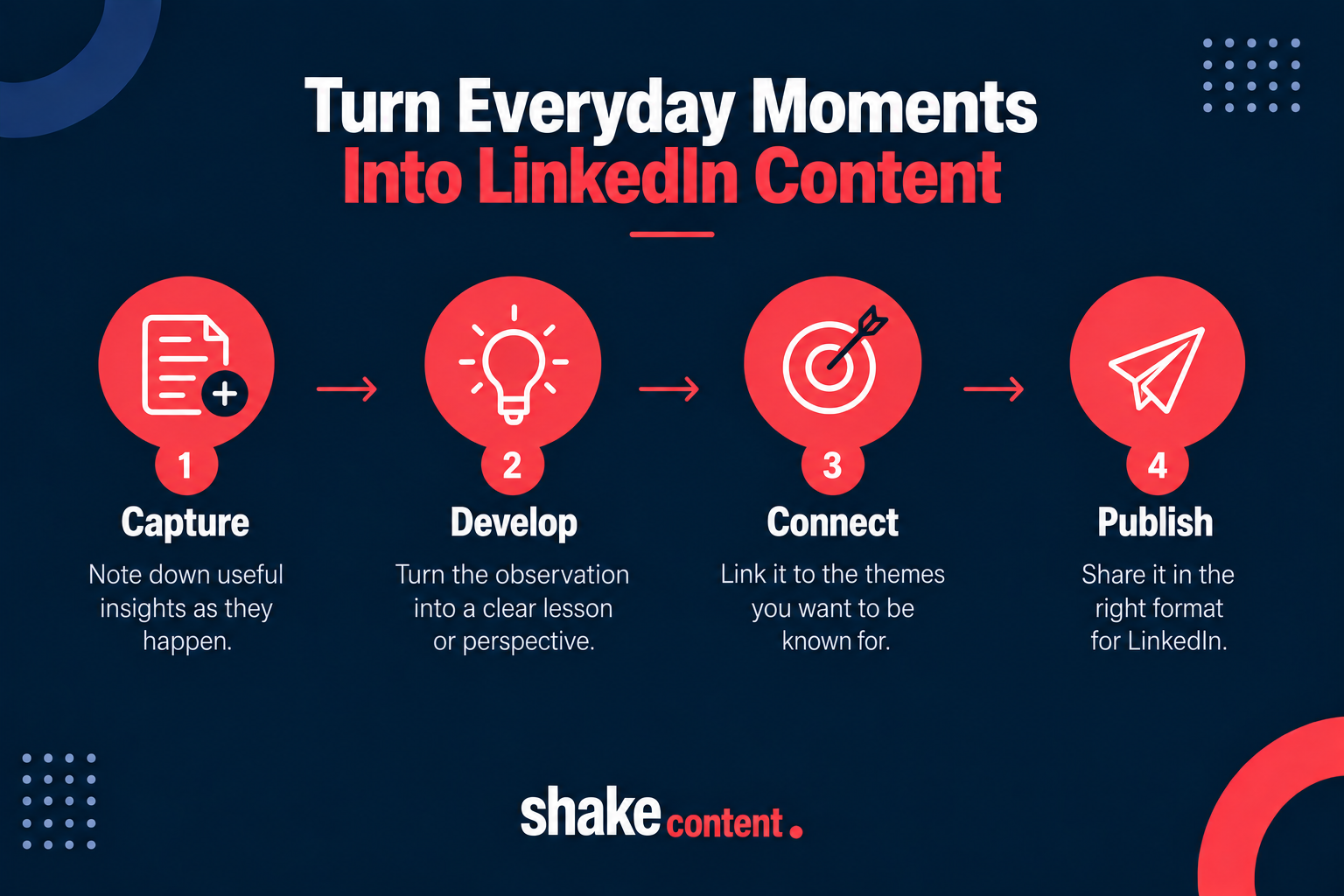
A useful content workflow therefore looks less like brainstorming and more like:
Capture → Develop → Connect → Publish
Capture the raw observation while it is fresh. Develop the underlying lesson or perspective. Connect it to the themes the founder wants to own. Then turn it into the format best suited to the idea.
Our CRIT Method for building a LinkedIn content engine develops this idea further by turning Context, Raw Input, Insight and Transformation into a repeatable process. The objective is to make content a product of the founder's existing thinking rather than another activity competing for their time.
The goal of founder-led LinkedIn marketing is not to produce an endless stream of good posts.
It is to make a founder's expertise increasingly recognisable.
Individual examples matter because they show how that expertise can appear: through an opinion, a customer observation, a business decision, a practical explanation or a story from experience. But the real value comes when those posts begin reinforcing one another.
That is where a LinkedIn content system becomes more valuable than a content calendar.
At Shake Content, we help B2B founders and leadership teams capture the thinking already happening inside their businesses and turn it into structured LinkedIn content, B2B storytelling and thought leadership that can compound over time.
A good founder-led post contains an idea that is relevant to the audience and grounded in the founder's actual experience or expertise. It should help readers understand how the founder thinks, not simply what their company sells.
No. Founder-led does not mean personal storytelling. Customer observations, industry perspectives, operating lessons and professional experiences can all create strong content without discussing private life.
There is no universal frequency. A sustainable rhythm of high-quality content is more valuable than publishing frequently without a clear perspective. A structured content system makes that consistency easier to maintain.
Yes, but the founder's expertise should remain the source material. A founder-led LinkedIn agency can capture that thinking, develop the strategy and manage the content workflow without replacing the founder's actual perspective.


