
LinkedIn has become an increasingly important part of how B2B companies build visibility, demonstrate expertise and stay connected with their market. But investing in LinkedIn content also raises a question that many marketing teams eventually face: where should that investment actually go?
The company page is the natural home of the brand, its expertise and its customer stories. At the same time, founders and executives can bring experience, opinions and personality to conversations in ways that corporate accounts often can't.
The decision becomes more important when resources are limited. Understanding the role of each account is therefore the first step towards deciding where to focus and how they can eventually work together.
Building a strong LinkedIn presence takes time, from developing ideas and creating content to maintaining the right LinkedIn posting frequency. Spreading those resources across too many accounts can quickly dilute the strategy.
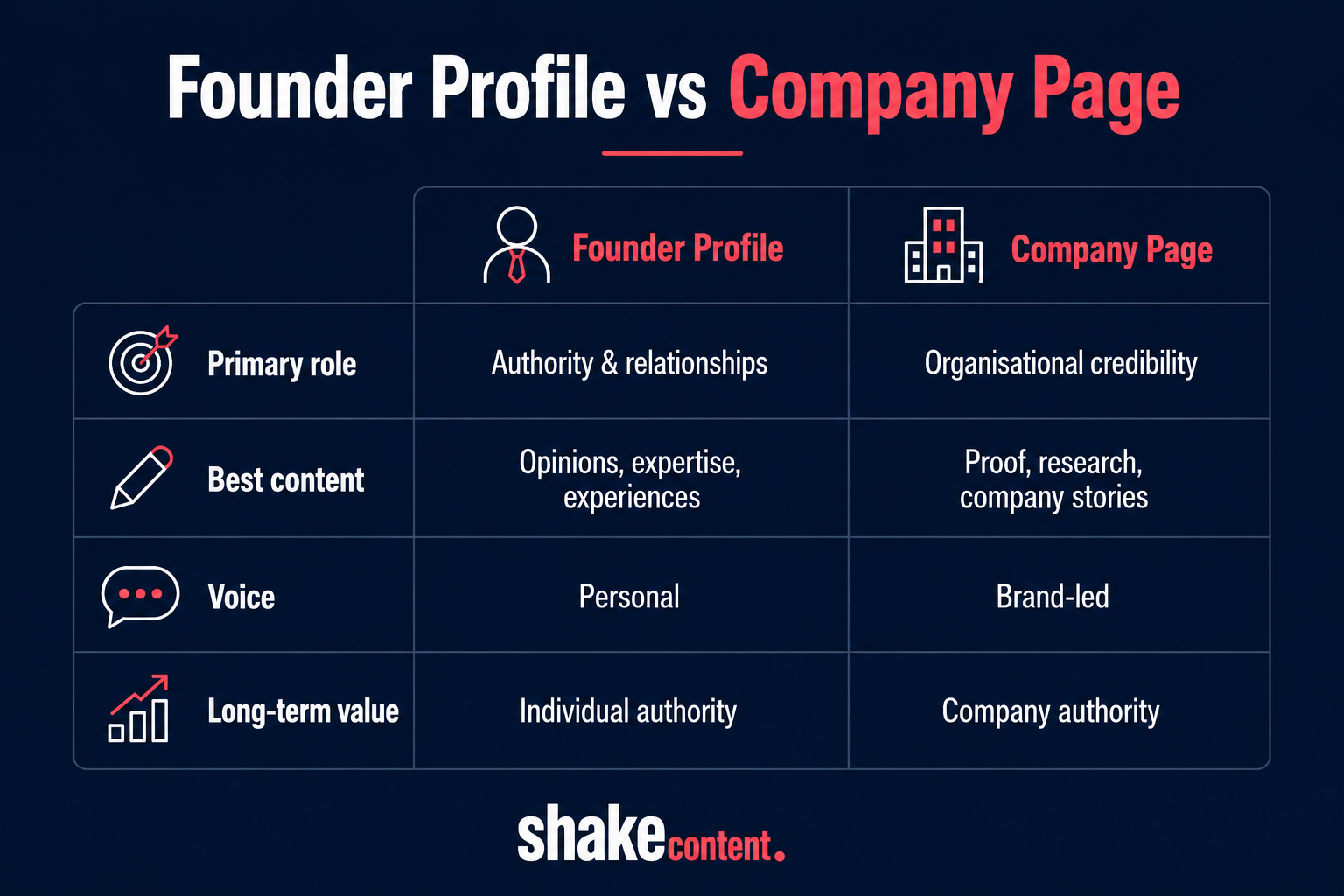
A founder's LinkedIn profile is typically the more personal side of a B2B presence. It gives founders space to share industry perspectives, first-hand experiences and expertise that can build relationships and B2B thought leadership over time.
The company page serves a broader organisational role. It can communicate customer proof, research, company expertise and developments while giving the wider business a consistent presence on LinkedIn.
The difference matters because the two shouldn't be judged by exactly the same measures. Founder content may generate more conversation and individual authority, while company content can strengthen credibility around the organisation.
For companies with limited resources, the founder profile is often the strongest place to start. But as part of a wider B2B LinkedIn strategy, the longer-term opportunity is usually to connect both rather than making them compete for attention.
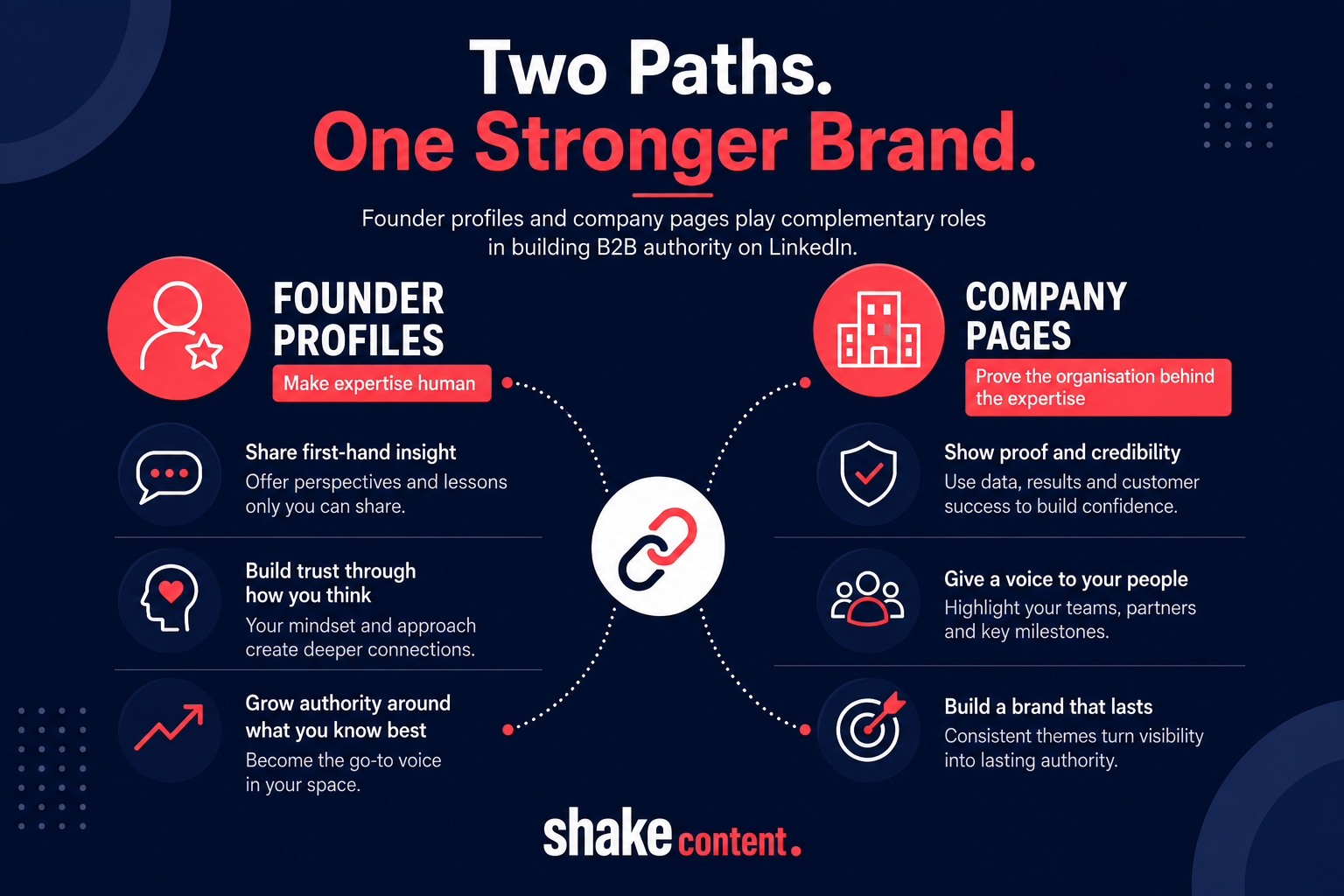
Founder profiles and company pages build different but complementary forms of authority. One makes expertise recognisable through people, while the other demonstrates the depth and credibility of the organisation behind them.
That distinction also reflects the wider difference between simply publishing LinkedIn content and building genuine thought leadership. The account itself matters less than whether the ideas consistently reinforce what the business wants to be known for.
Founders have access to experiences that naturally lend themselves to useful content. Customer conversations, strategic decisions, market changes and lessons from building the company can all reveal perspectives that aren't available to someone observing the industry from outside.
Sharing those perspectives helps audiences understand not only what the founder knows, but how they think. This makes founder profiles particularly effective for LinkedIn personal branding and developing authority around specific subjects.
The challenge is producing that content consistently without turning the founder into a full-time creator. A structured process for turning founder insight into a LinkedIn content engine can capture ideas from conversations and everyday business experiences instead of requiring founders to continually invent topics from scratch.
That authority should ultimately reinforce the company. The strongest founder content remains connected to the expertise, positioning and problems the business wants to own.
The company page adds another layer around that individual authority.
Customer stories, original research, product insights and team expertise can demonstrate that the knowledge being communicated extends beyond one person. It also gives customers, partnerships, employees and company developments an appropriate place within the content strategy.
As the organisation grows, this becomes more important. The brand begins developing authority of its own while giving the expertise of other people inside the business greater visibility.
This is where consistency becomes more valuable than chasing occasional virality. Repeatedly communicating clear themes across the company and its people makes the overall positioning easier for the market to recognise over time.
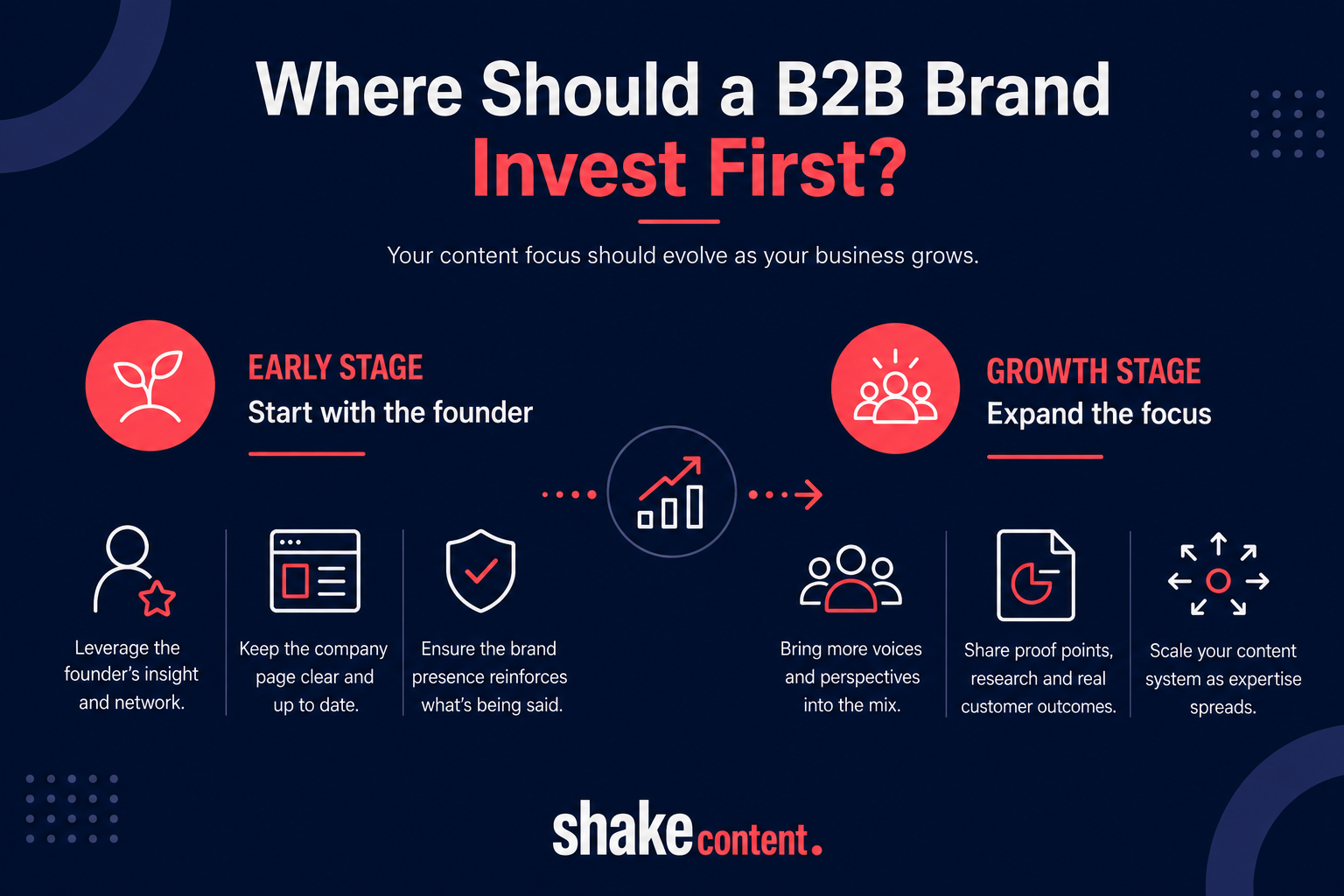
For an early-stage founder-led business, prioritising the founder often makes sense. Much of the company's expertise, network and customer knowledge may still sit with them, providing an immediate source of credible ideas.
The company page should still remain active and clearly communicate what the organisation does. Someone who discovers the business through a founder should find a company presence that supports the authority they have already encountered.
As the company grows, the balance can broaden. Product leaders, commercial teams and other subject-matter experts may have valuable perspectives of their own. Meanwhile, the company has more customer stories, research and internal knowledge to communicate.
The right investment therefore changes with the organisation. Rather than maintaining the same founder-to-company split indefinitely, the content system should expand as expertise becomes more distributed.
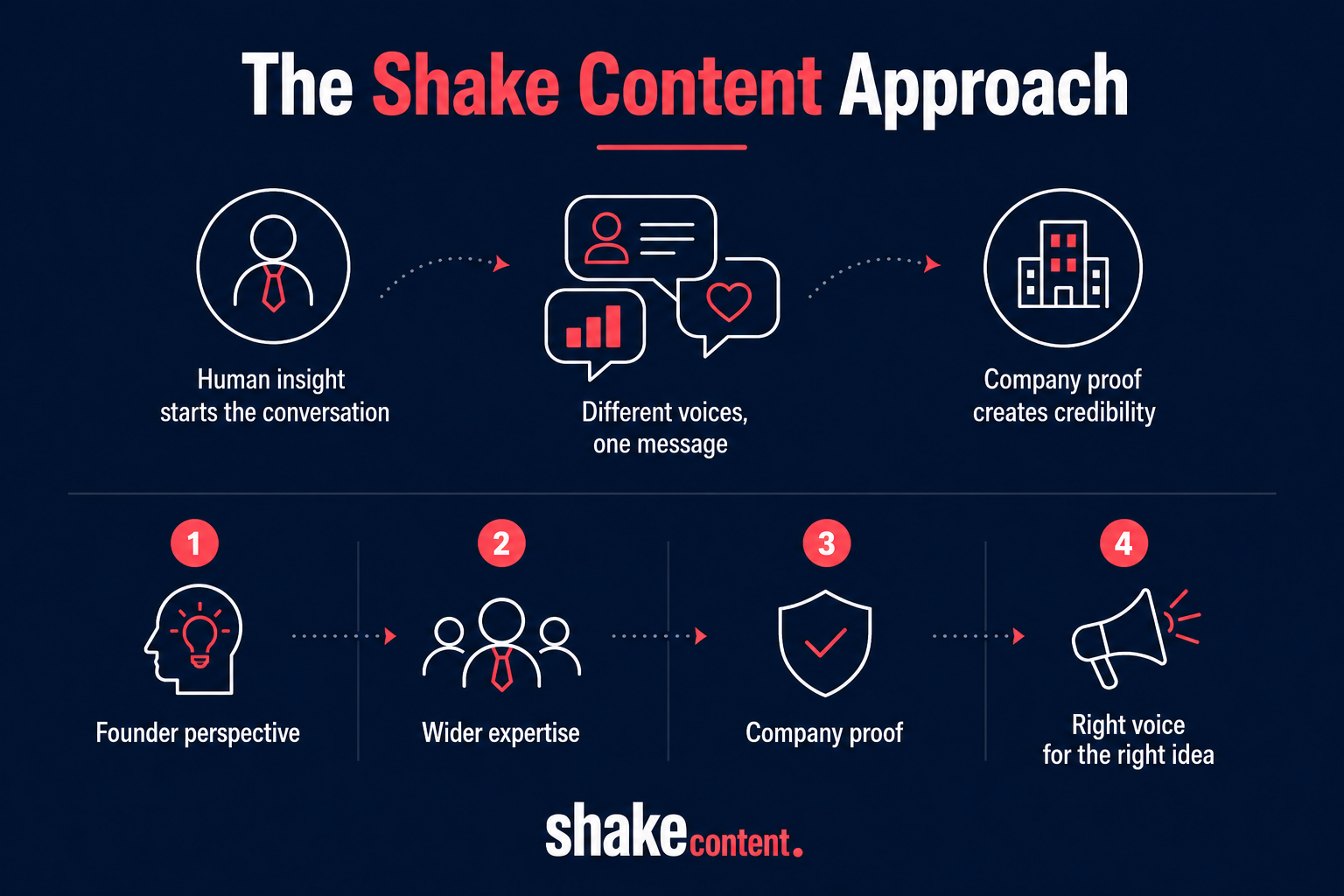
Founder and company content should reinforce the same positioning from different perspectives.
A founder might identify a recurring industry problem based on customer conversations. The company page could support that idea with research or a customer story, while another leader could explore a specific operational or technical aspect.
This creates several useful pieces of content from expertise the business already has. Applying B2B storytelling techniques to otherwise dry industry topics can help each voice communicate that knowledge differently without simply republishing the same post.
At Shake Content, we always recommend developing founder and company content together. Founder profiles build human authority and industry relationships, while the company page adds proof, wider expertise and organisational credibility.
It also creates a more scalable system. As the business grows, new leaders and subject-matter experts can contribute without developing disconnected personal brands.
Our framework helps determine how ideas should move through that system:
1. Founder perspective: Capture opinions, experiences and market observations the founder can credibly own.
2. Wider expertise: Surface insights from leaders, teams and customer conversations.
3. Company proof: Use customer outcomes, research and business expertise to support those ideas.
4. Right voice: Match each idea with the founder, expert or company page best placed to communicate it.
Together, these processes create a content engine where different voices strengthen the same positioning without duplicating content.
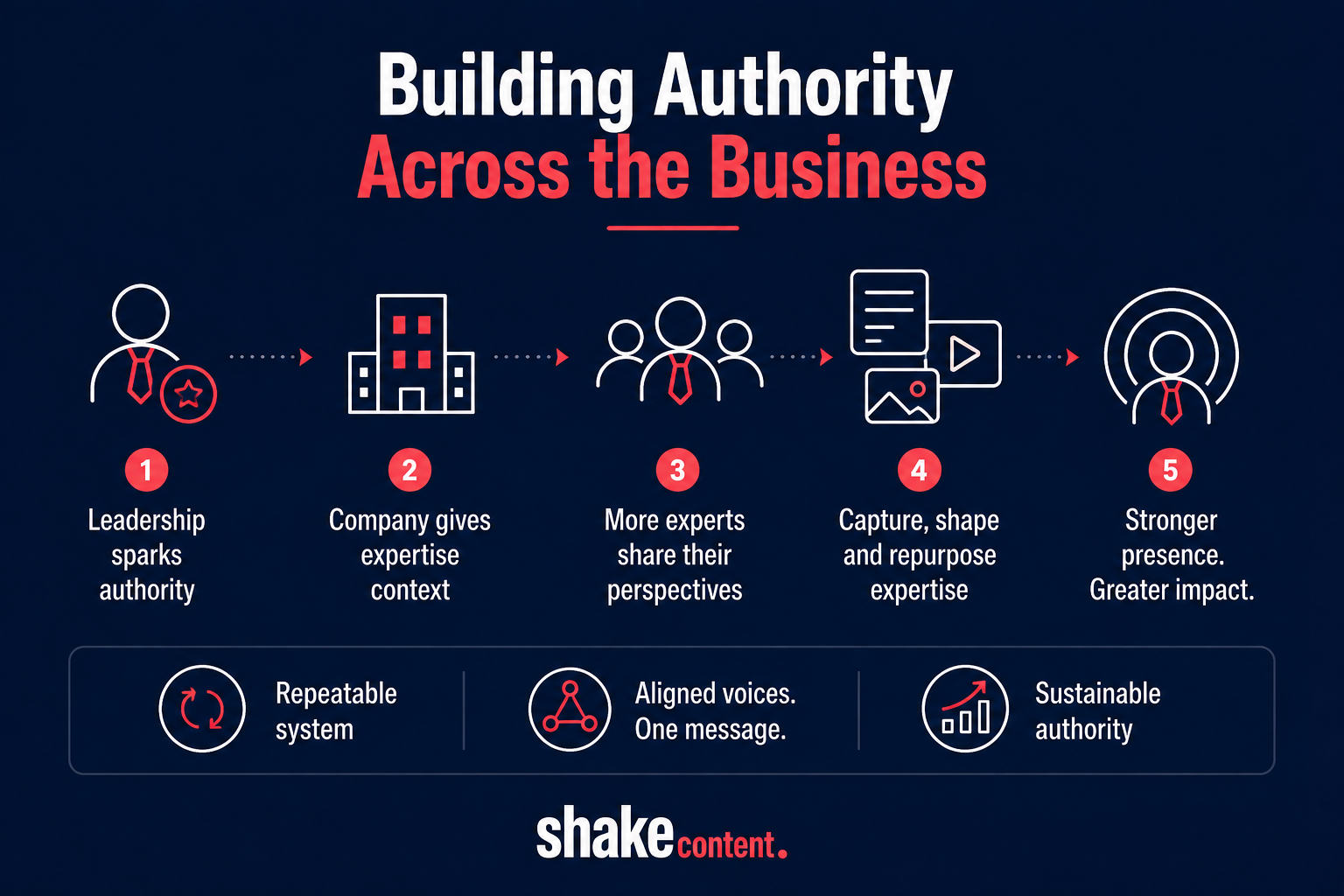
The long-term opportunity on LinkedIn is bigger than growing one successful founder profile or maintaining an active company page. It is about making the expertise across the organisation more visible.
The founder may provide the initial source of authority, while the company page gives that expertise organisational context. As the business grows, other leaders can begin owning subjects where they have direct experience and credibility.
A repeatable system makes this easier to sustain. Instead of treating every post as a separate creative task, companies can capture expertise continuously, develop it into different formats and distribute it through the most relevant voices. The CRIT Method for building a LinkedIn content engine, for example, provides one way of structuring that process.
Over time, this creates a connected LinkedIn presence where founders, experts and the company reinforce what the business wants to be known for.
If resources are limited, the founder is often the stronger starting point because their experience can produce distinctive thought leadership. Where possible, however, founder and company content should be developed together.
Founder profiles can generate stronger engagement, particularly with personal and opinion-led content. Company pages serve a different purpose by building organisational credibility and visibility.
No. They can address the same themes, but each should add something different. The founder might provide perspective while the company page contributes proof or wider organisational expertise.
It can work initially, particularly for smaller founder-led businesses. As the company grows, relying entirely on one person limits how much of the organisation's expertise becomes visible.
Define what the business wants to be known for, identify where relevant expertise sits, capture those insights consistently and match each idea with the account best placed to communicate it.


